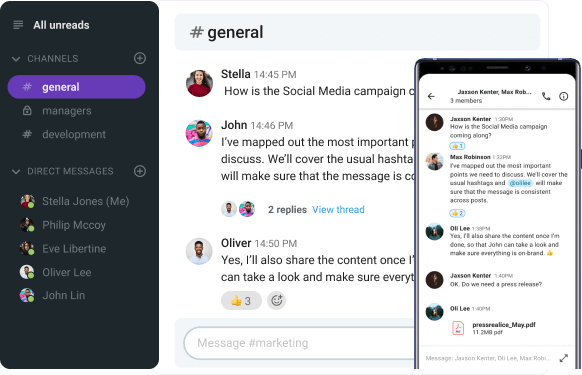
Responding to condolences at work can be uncomfortable for most people — you’re trying to manage your bereavement and your workload while also navigating messages from managers and coworkers.
Although no one would take offense even if you didn’t respond, there are still a few ways to reply to condolences that won’t take too much effort. There is no perfect reply, and you should not feel pressured to craft a polished response — a simple acknowledgment is enough.
We’ll give you 70+ examples of professional responses to condolences, so you don’t have to rack your brain thinking of what to say when someone says ‘Sorry for your loss’.

How to respond to ‘Sorry for your loss’ with quick and simple responses
During such a hard time, it’s not unusual or unexpected to be overwhelmed, especially if you were out-of-office for a couple of days and have tons of messages of condolences waiting for you.
In these situations, it’s completely understandable to respond with a quick and simple message. These types of replies allow you to recognize someone’s kindness without getting pulled into a long exchange.
Here are some examples of short and simple messages for when you’re overwhelmed:
“Thank you for your support.”
“I really appreciate you thinking of me.”
“Thank you, that’s very kind of you.”
“Thank you for reaching out.”
“I appreciate your compassion.”
“Thank you. It means a lot to me.”
“Your support means more than you know.”
“Thank you for the message.”
“I’m grateful for your kind words.”
“I appreciate your thoughtfulness.”
💡 Pumble Pro Tip
If you’re in a situation where you want to express condolences, it can be hard to know what to say. Here are some pointers of professional etiquette for this situation and examples of how to say ‘Sorry for your loss’ at work:
How to respond to ‘Sorry for your loss’ from your manager or leadership
Replying to someone in a leadership role can feel more daunting.
You want to stay respectful and professional, but you also need space to process your emotions without pressure or extra expectations. A thoughtful response lets you acknowledge their support while still protecting your boundaries.
The following examples strike the perfect balance that will work in most workplace cultures.
“Thank you for your understanding during this time. Your support means a lot.”
“Thank you for the kind message. It means a lot to me.”
“I appreciate you checking in. Your support means more than you know,”
“Thank you for being so understanding. I’m grateful for your support.”
“Thank you for giving me the flexibility I need right now.”
“Your message means a lot to me. Thank you for reaching out.”
“Thank you for your patience and understanding.”
“I’m grateful for your support and understanding during this difficult time.”
“Thank you. I deeply appreciate your support.”
“Your condolences are much appreciated.”
💡 Pumble Pro Tip
Many employees often feel uncomfortable or awkward talking to higher ups in the company. To learn more about upward communication and how detrimental it can be when you don’t nurture it, check out our blog post:

How to respond to ‘Sorry for your loss’ from a close colleague or work friend
When the message comes from someone who knows you well, the tone shifts.
There is more trust, more history, and often more emotion.
When you experience a loss, these will be some of the first people to reach out just to check in on you, express their condolences, and ask how they can help.
And when they do, here’s how you can respond:
“Your message means a lot. Thank you for being there for me.”
“I’m grateful to have you in my corner. Thank you for your support.”
“Thank you for being there for me. Your support has really helped me.”
“Thank you for being so thoughtful. I’m lucky to have you.”
“I appreciate you being here for me. I don’t know what I would do without you.”
“I appreciate your condolences, it means a lot to me.”
“Thank you so much. It’s so comforting knowing I can turn to you in my time of need.”
“Your message brought me a lot of comfort. Thank you.”
“Thank you. Your words and support mean the world during this time.”
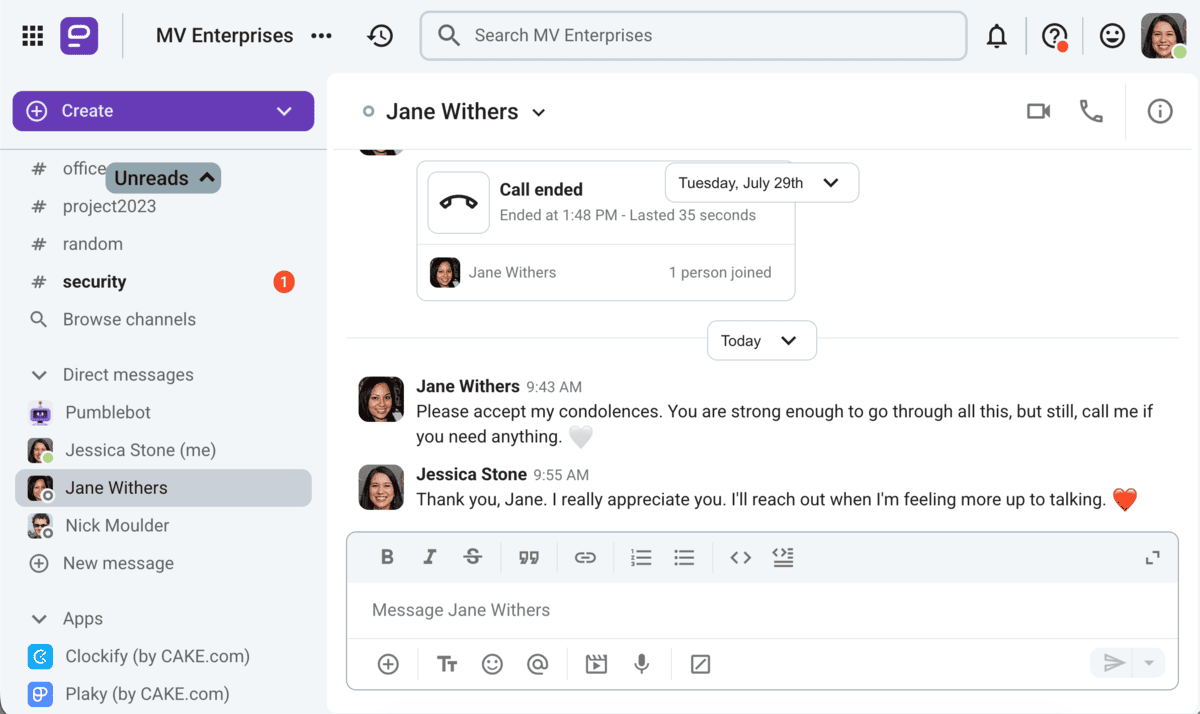
How to respond to ‘Sorry for your loss’ to a teammate or acquaintance
Except for a few friendships you may develop at work, in most cases, you won’t necessarily be close with your coworkers.
Still, you can expect that they will reach out to you in your moments of grief to express their condolences and ask how you’re doing. These messages will likely be a bit more concise and less personal than the ones you get from close friends.
So, you can prepare similar replies. Here are some examples:
“Thank you for your kind words. I’m grateful for the team’s support.”
“I appreciate your thoughts and kind words.”
“Thank you for reaching out.”
“Thank you. Your message means a lot to me.”
“Your message was very kind. Thank you.”
“Your kindness is appreciated. Thank you.”
“I’m grateful for your support.”
“Thank you for taking the time to reach out.”
“I appreciate your support. It means a lot to me.”
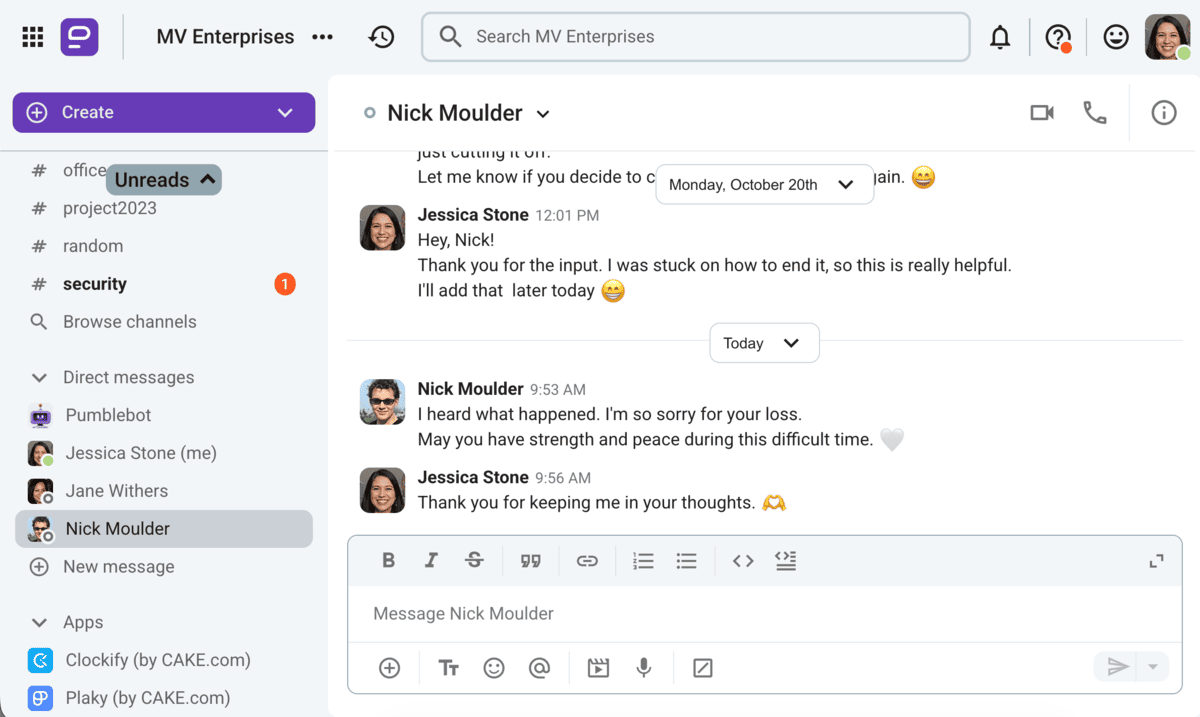
Check in with coworkers via Pumble
How to respond to ‘Sorry for your loss’ formally
If you need more formal and professional responses to condolences at work, here are some examples that can help you craft a note to coworkers, bosses, or clients and thank them professionally for their support during this time.
“I appreciate your condolences.”
“I would like to express my gratitude to the entire team at [company name]. Our family appreciates the kind words.”
“Thank you very much. I’m very grateful for such supportive and caring coworkers.”
“Your support and understanding mean very much during these difficult times.”
“Thank you very much for your kind words. I really appreciate your patience and understanding during my absence. It means a lot to know we have a great and supportive team who can cover for each other during a tough period.”
“Thank you for your thoughtful message. I truly appreciate your support during this difficult time.”
“Your condolences are greatly appreciated. Thank you for keeping my family in your thoughts.”
“Thank you for your kind words and understanding. It has brought comfort during a difficult time.”
“Your message was very kind and sincerely appreciated. Thank you for your support.”
“Thank you for acknowledging my loss. Your understanding has been very helpful as I navigate this difficult time.”
💡 Pumble Pro Tip
Formal communication is still an expected style of communication in many workplaces. To learn more about formal communication and how to improve it, check out our blog post:
How to reply to condolences at work as a boss
As a team leader, your relationship with your team is pretty much dependent on your leadership style.
If you lean toward a more empathetic leadership style, chances are your teammates will feel comfortable sending heartfelt condolence messages.
On the other hand, if you practice one of the more traditional styles of leadership (e.g., structural), you’ll probably be more in favor of formal communication in the workplace.
Your teams’ condolence messages and your replies will also most likely follow your commonly practiced communication style.
Still, regardless of your preferred communication style, your team will surely do their best to craft encouraging and sympathetic messages to show their support during your mourning.
Take a look at our examples below to get an idea of how to ensure your reply communicates appreciation while still maintaining the subtle boundaries present between your roles in the workplace.
“Thank you. It’s comforting to know I have such a supportive team around me.”
“I would like to offer my appreciation for the entire team at [your company]. I’m grateful we have such an amazing team I can trust to make the right decisions in my absence.”
“Thank you for the kind words. I will let you know the date I plan to return to work.”
“I’m grateful for your support. It has been a comfort to receive such considerate messages from the team”
“I value your kindness and the support from the entire team. Thank you for thinking of me.”
“I appreciate all the support. It means a great deal to know the team is behind me.”
“I appreciate all of your support during this difficult time.”
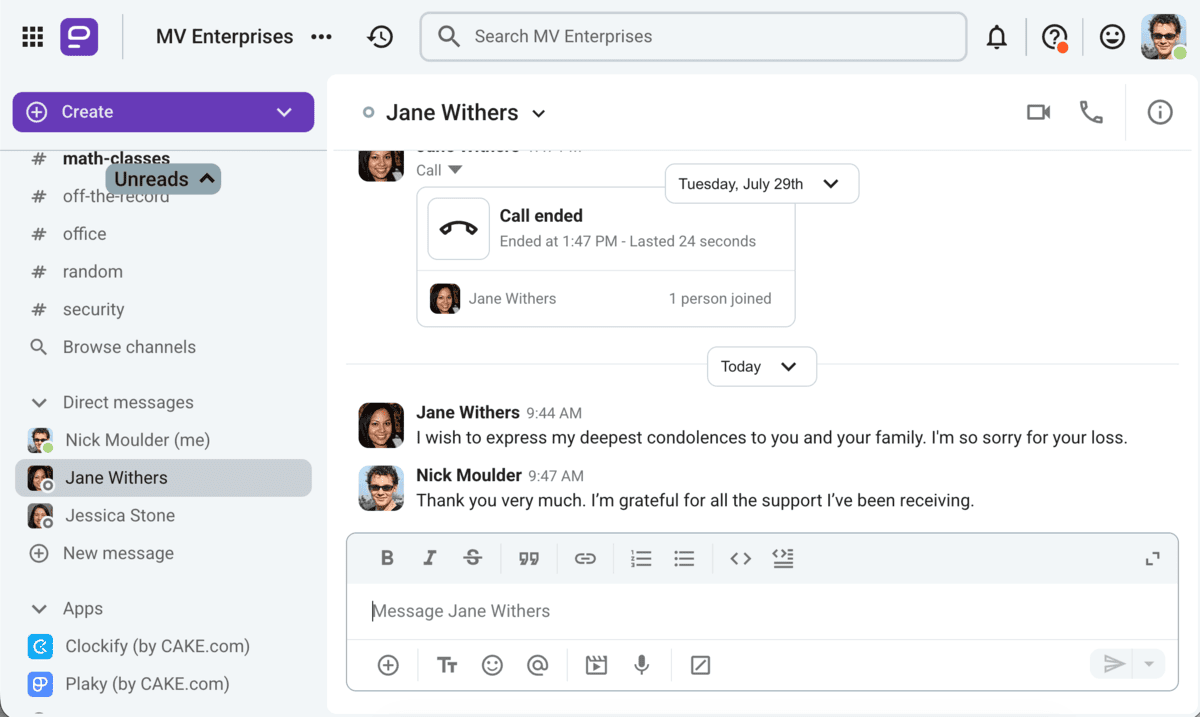
Connect with your team in Pumble
How to respond to ‘Sorry for your loss’ in a public channel or group email
Public messages can feel overwhelming — a group email thread, a company-wide public channel, or a big meeting might bring in a wave of condolences all at once.
Replying to each person individually is not realistic or necessary in this case. A single group acknowledgement keeps things simple while still showing gratitude.
Here are some examples of how to respond in a group chat or email:
“Thank you all for the kind messages and support. It means a great deal to me and my family.”
“I’m grateful for everyone’s thoughts and encouragement. Thank you.”
“Thank you all. Your support means a lot to me.”
“I appreciate every message. Thank you for thinking of me and my family.”
“I’m very grateful for all of your support. Thank you.”
“Thank you all for being so thoughtful and supportive during this time.”
“Thank you for reaching out, everyone. It truly means a lot to me.”
“All of your messages mean so much to me. Thank you.”
“I truly appreciate the compassion and support all of you have shown. Thank you.”
“Thank you so much, team. I appreciate the condolences.”
💡 Pumble Pro Tip
To learn more about group communication and how to improve it in your team, read our blog post:

How to respond to ‘Sorry for your loss’ when you don’t want to talk about it
There will be moments when the last thing you want to do is talk about your loss. Protecting your privacy is valid, and setting boundaries is healthy — there’s no need to feel bad about it.
These responses will help you close the conversation gently while keeping your emotions in check.
Here are some examples of what to respond to condolences when you don’t want to invite more questions:
“Thank you for your kindness. I’m not ready to talk about it, but I appreciate your support.”
“Thank you. I’m keeping things private for now but I’m grateful for your support.”
“I appreciate your message. I’m taking some quiet time, but thank you for understanding.”
“Thank you for thinking of me. I’m not up for conversations yet.”
“I appreciate the support. I’ll share more when I’m ready.”
“Thank you for your message. I’m keeping things private for now.”
“Your support means a lot to me. I will be staying offline, but I appreciate you.”
“Thank you for the kind words. I’m not able to talk about it right now.”
“I appreciate your condolences. I’m handling things privately for now.”
“Thank you for the support. We’ll talk more when I’m ready.”
💡 Pumble Pro Tip
Protecting your boundaries at work can be challenging, especially if your team uses personal communication tools for work. To learn how this digital marketing agency set healthy communication boundaries in their team, check out this customer story:
How to navigate where to respond in a digital workplace
Knowing what to say is hard. Knowing where to say it in a busy digital workspace can be just as tricky.
Some people will reach out in group chats, others will send private messages in team communication apps, and a few might email you separately. This might end up with you juggling messages across multiple channels at once — which is where stress and pressure can set in.
You want to acknowledge everyone, but you also need to protect your time and energy.
Tools like Pumble give you clear communication paths that make acknowledging sympathy at work easy:
- A reply in a thread on a public announcement gives you a place to post a single ‘Thank you’ message, keeping the main channel organized.
- For more private conversations and personal messages, direct messages give you the space and privacy you need.
Choosing the right place to respond keeps things respectful and organized.

Handle difficult conversations with Pumble by CAKE.com
Grief is hard. Communication tools shouldn’t make it even harder.
Pumble helps you navigate these conversations with clarity by keeping messages organized and giving you multiple options to reply — publicly or privately.
When you are already dealing with so much, tools designed for clear, low-pressure communication make a real difference.
Handling difficult conversations gets easier with the right tools — try Pumble.