
When your team is growing, you shouldn’t have to pay a fortune for a chat app just to get a new team member settled in. High costs like that drain your budget and make it impossible to invest in keeping your best people.
This guide breaks down effective employee onboarding that sets your new hires up for success from the start, without compromising your business’ bottom line.
You’ll also see how other growing companies are fixing their onboarding by switching to Pumble by CAKE.com, an internal communication software. By using Pumble’s powerful suite of features, you can give your new talent everything they need to succeed without the enterprise price tag.
Let’s dive in!
- Employee onboarding is the process of integrating new hires into the company culture and familiarizing them with their roles and responsibilities.
- The average cost of a bad or a badly onboarded hire is $17,000.
- Properly preparing the candidate and explaining what’s to come can ensure the success of the onboarding process.
- The 4 phases of onboarding include: pre-onboarding, welcoming, training, and transition.
- No matter what your onboarding process looks like, partnering with a powerful and secure team communication app like Pumble is sure to elevate your employee onboarding process.
What is employee onboarding?
Employee onboarding is the process of integrating new hires into the company culture and familiarizing them with their roles and responsibilities.
The onboarding process includes, among other things:
- Supplying new employees with company-issued equipment
- Introducing new hires to their teams
- Providing ongoing education
- Tracking the effectiveness of the program
Introduce new hires over Pumble
According to Lisa M. Sanchez, a vice president of employee experience and engagement at JustDigIn2It LLC, integrating new hires well is a crucial part of the recruitment process:

“After investing so much in the recruitment process, employers should invest just as much time and effort in onboarding so that new hires are informed, prepared, and ready to work.”
A well-designed onboarding program leaves a good first impression as well as:
- Expedites the integration of new hires into the company culture
- Improves employee engagement by 4.3 times
- Increases new hire productivity by up to 70%
- Prevents the company from wasting money on training more employees due to employee turnover
But, why should organizations put that extra effort and resources towards onboarding new employees?
The hidden cost of poor onboarding: Why new hires leave
The average cost of a bad or a badly onboarded hire according to Forbes is $17,000 — and that number is much higher for senior and executive roles.
Still, around 88% of companies fail to properly onboard their employees, according to Gallup’s report. This is a massive missed opportunity, especially considering how quickly new hires make up their minds. Research from Bamboo HR found that 70% of new employees decide if a job is the right fit within their first month — and 29% know within the very first week.
One of the biggest challenges new hires face is a lack of context. If a company uses email as their main form of communication, it usually means that critical information is buried in long email threads or (even worse) in individual inboxes. Before long, new employees find themselves completely unable to track project history and progress.
As a result, new hires constantly interrupt colleagues for updates, which slows down everyone’s workflow and builds a heavy dependency on experienced team members. In fact, research by Atlassian shows that 87% of employees waste around 5 hours every week trying to clarify unclear messages and disconnected conversations.
This kind of inefficient communication creates unnecessary stress and reduces job satisfaction in new hires.
Without quick access to the right information at the right time, new employees struggle to fit in and lose motivation.
Centralize your onboarding resources
The 4 phases of a successful employee onboarding process
When it comes to onboarding best practices, the 4 phases of onboarding are increasingly recommended by HR professionals:
- Pre-onboarding
- Welcoming
- Training
- Transition
Let’s take a deeper look at each of the onboarding process steps.
#1: Pre-onboarding
The first phase of onboarding starts the moment a candidate accepts your offer, and it lasts until their very first day.
Before your new hire even steps through the door (or logs in online) make sure your communication tools are ready to go. With Pumble’s simple workspace administration, your managers and IT teams can quickly set up role-based access controls (RBAC) in just a few clicks. This ensures your new employee has the exact permissions and access they need from the second they log in.
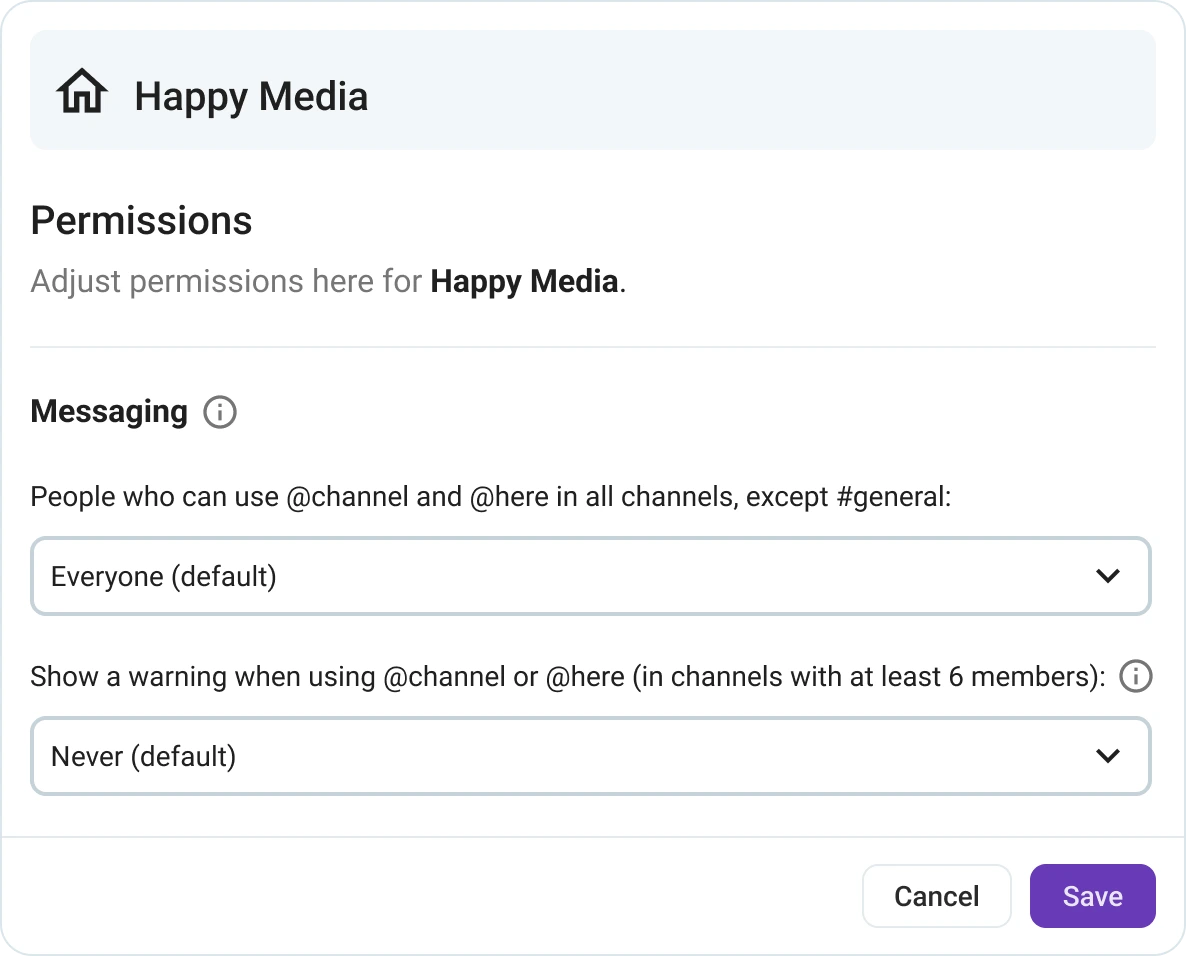
Check out the video below to learn how to make the most of this Pumble feature:
By organizing your setup early, your new hires instantly get access to the channels, conversations, and resources they actually need. They won’t have to wait around for manual access approval, nor will they feel overwhelmed by unnecessary information. A clean, structured workspace helps your new employees feel more connected and productive from the very beginning.
Be sure to remember that after accepting the offer, the candidates naturally feel a bit anxious about what’s coming next. Any miscommunication or misunderstanding at this stage can make them second-guess their decision to join your company.
Properly preparing the candidate and explaining what’s to come can ensure the success of this first phase, as Katarina Mihaljev, an employee experience specialist at CAKE.com, reports:

“It all starts with preparation. When a new employee receives basic information in advance about the company, their team, and the first day of work, they enter the process much more easily.”
To put this into action during the pre-onboarding phase, send over all the necessary paperwork to the candidate right inside Pumble channels. Give them enough time to actually complete everything, and make sure they know you’re always there to answer any questions along the way.
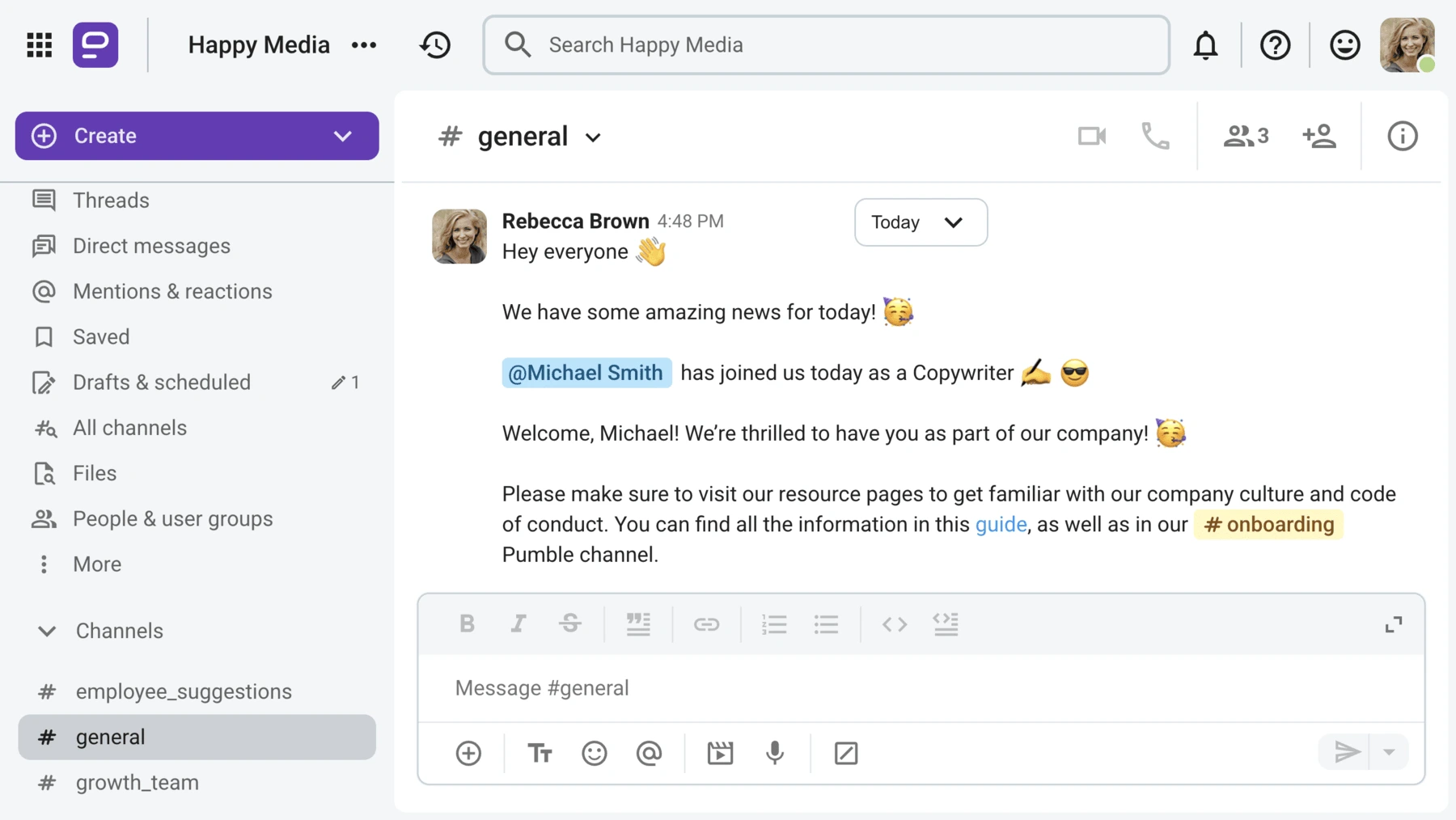
You can also use Pumble’s private channels to set up a dedicated space for the new hire, their manager, and an HR team member before the actual start date. This private group gives everyone involved a casual place to:
- Say hello.
- Break the ice.
- Start building a great relationship early on.
💡 Pumble Pro Tip
Miscommunication can cause a lot of trouble even after the pre-onboarding phase. To learn how to recognize and handle it, read our post:
Ultimately, keeping your candidate informed and keeping the lines of communication open ensures they stay enthusiastic about their new role.

#2: Welcoming
The second phase of onboarding is the welcoming phase, and it usually lasts for one or a couple of weeks. Its main goal is to help your new employee:
- Get acclimated to their new surroundings.
- Get to know the team.
- Understand company culture.
The most important rule during this phase is simple — don’t overwhelm the new employee. Keep their first day as simple as possible, while still giving them the essential information.
Pumble’s public, company-wide channels are perfect for publicly welcoming the new hire and introducing them to their team and important stakeholders. Since these channels also act as your digital knowledge base, they serve as the central spot where the new hire can find all the resources they need to get through their first week.
To make the most of these first few weeks without causing information overload, you can:
- Host a first one-on-one meeting with the employee on their first day to introduce them to the company culture and answer any immediate questions.
- Hold a team virtual meeting to introduce the new employee to teammates.
- Give an in-person or virtual office tour to the new hire, and explain where they can find key information and resources and who to go for help.
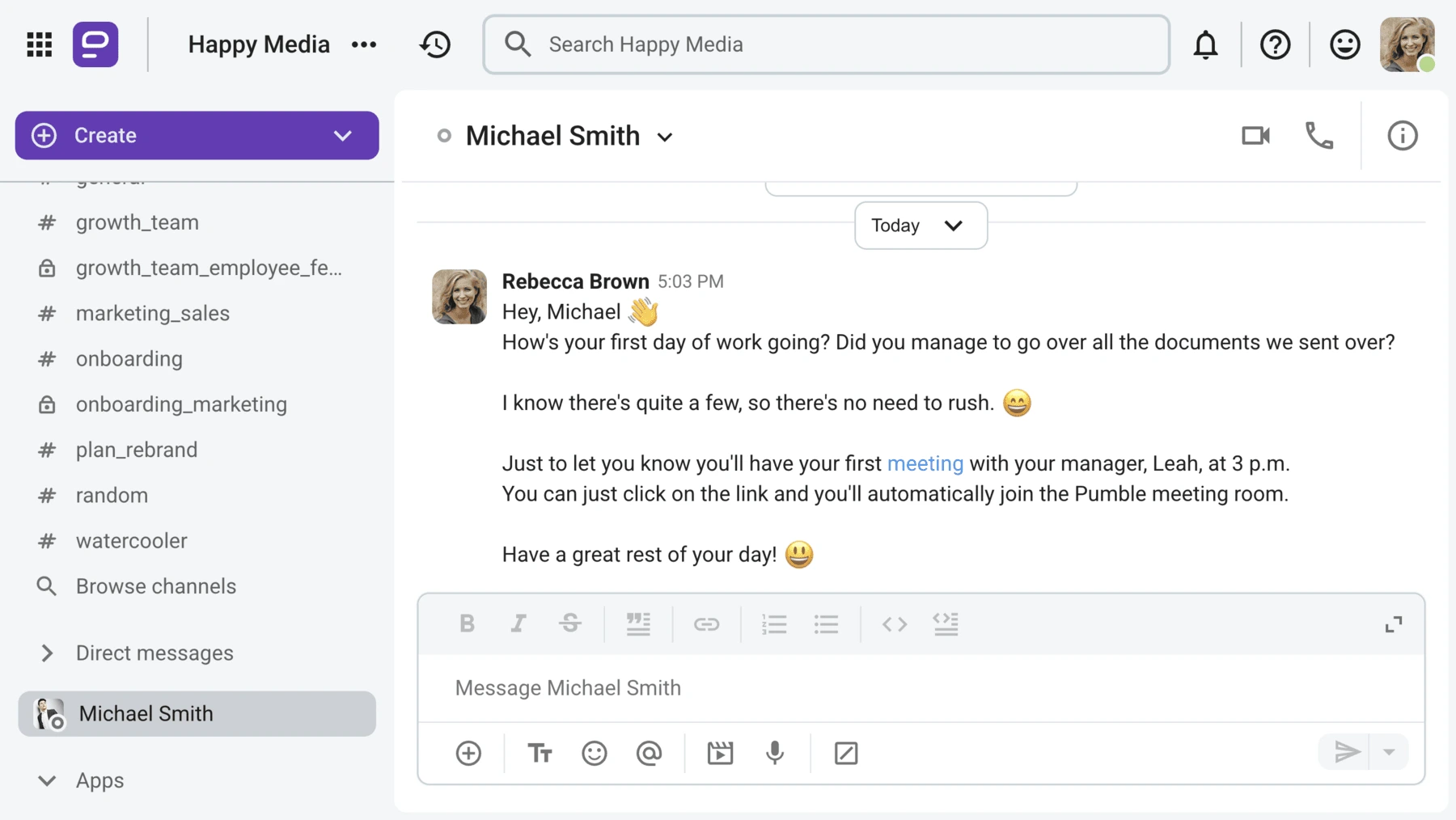
Hold team meetings over Pumble
#3: Training
The training stage is where you help your new employees truly reach their full potential. It’s all about transitioning them into their day-to-day role and giving them the specific skills they need to succeed.
To ensure that the new employee gets the right support without feeling lost, you can try pairing them up with an onboarding buddy or mentor, as one of our experts, Mary Schroeder, a chief HR officer at Flex HR, advises:

“Once training starts, the process of transitioning the new hire into their role begins. We assign a mentor to the new hire to help transition them into the position. This helps them feel like part of the team.”
You can easily handle this training directly inside Pumble by using voice and video calls to walk them through your company’s processes and procedures at a comfortable pace.
Since the first month can feel like a whirlwind, it is a good idea to schedule regular check-in meetings. Have your new employees connect the Google Calendar add-on to their Pumble workspace, so they automatically get reminders and never miss an important meeting.
Of course, the training phase should also focus on helping new hires work independently rather than having to ask someone for help every few minutes. Pumble’s unlimited searchable history helps new hires look back through past conversations and project updates whenever they need more context. Pumble lets them find answers on their own in no time, so they don’t have to waste time piecing information together from multiple email archives.
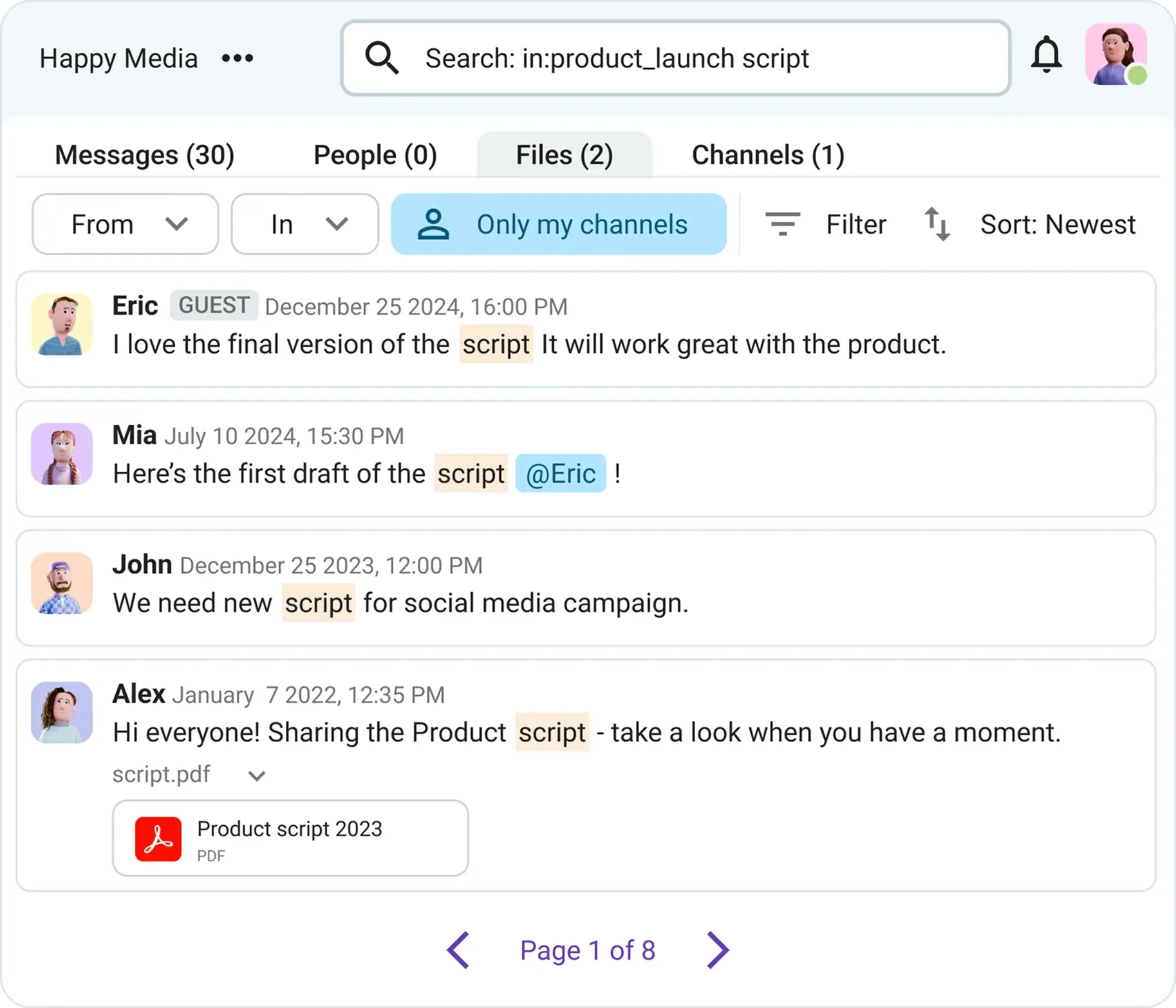
Create your knowledge base in Pumble
💡 PUMBLE PRO TIP
Interested to know more about employee engagement, what affects it, and how you can improve it? Then check out our guide:
#4: Transitioning
The final phase of onboarding is transitioning the employee from a “new hire” into a fully operational, independent worker.
It’s a good idea to set some goals for the employee during this stage and have regular check-ins to keep them informed about their progress.
However, don’t forget that constructive feedback, like any other communication, should go both ways — so leave some time and space for the new employee to provide their own feedback to the entire process.
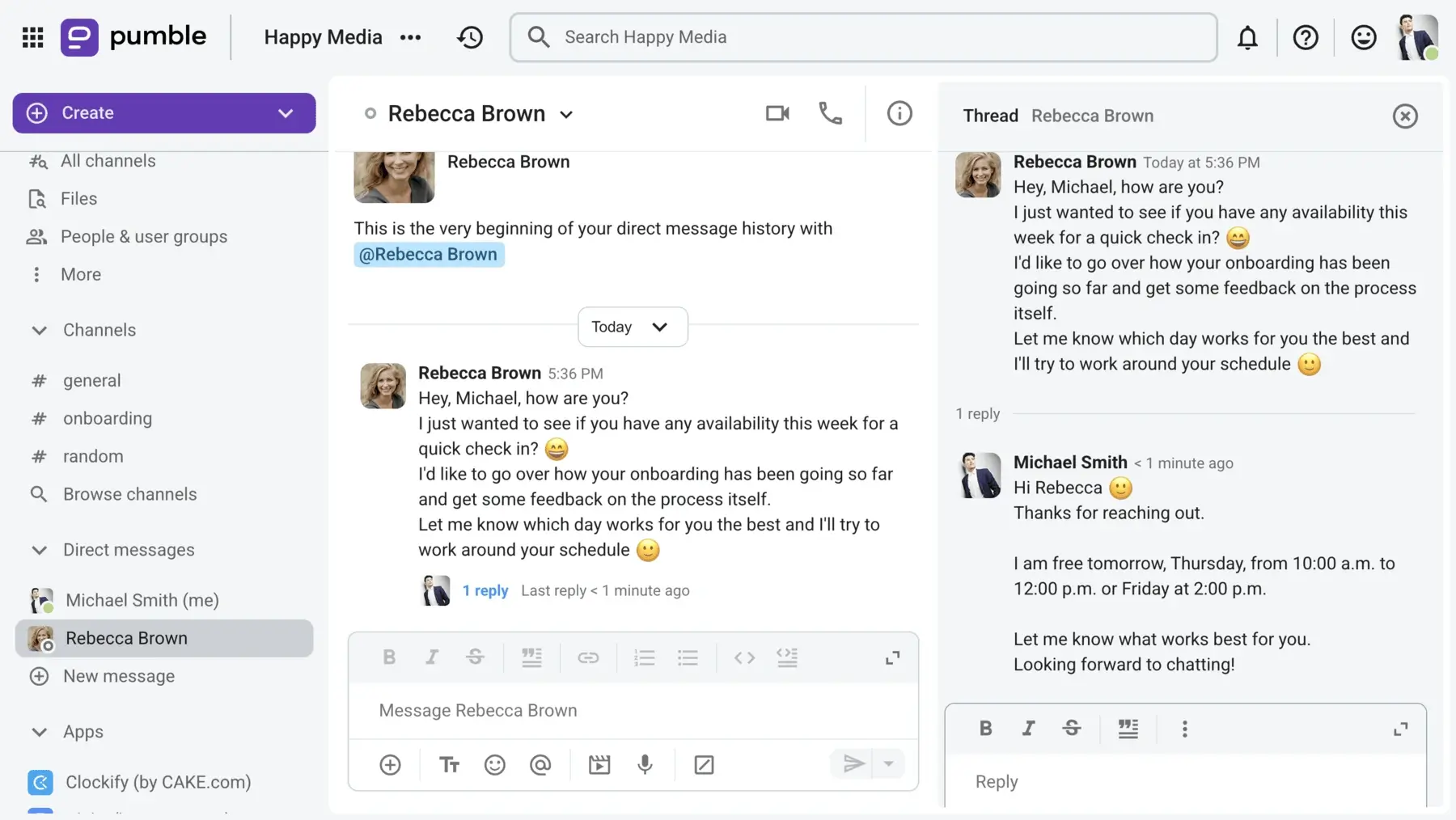
You’ll find that requesting feedback from new employees doesn’t have to be a formal affair at all. Instead of scheduling a formal meeting, you can simply send them a quick direct message in Pumble. Pumble’s mobile messaging and threaded conversations also make it incredibly easy for new hires to reach out whenever they have a question, and get the answers they need from the most relevant sources.
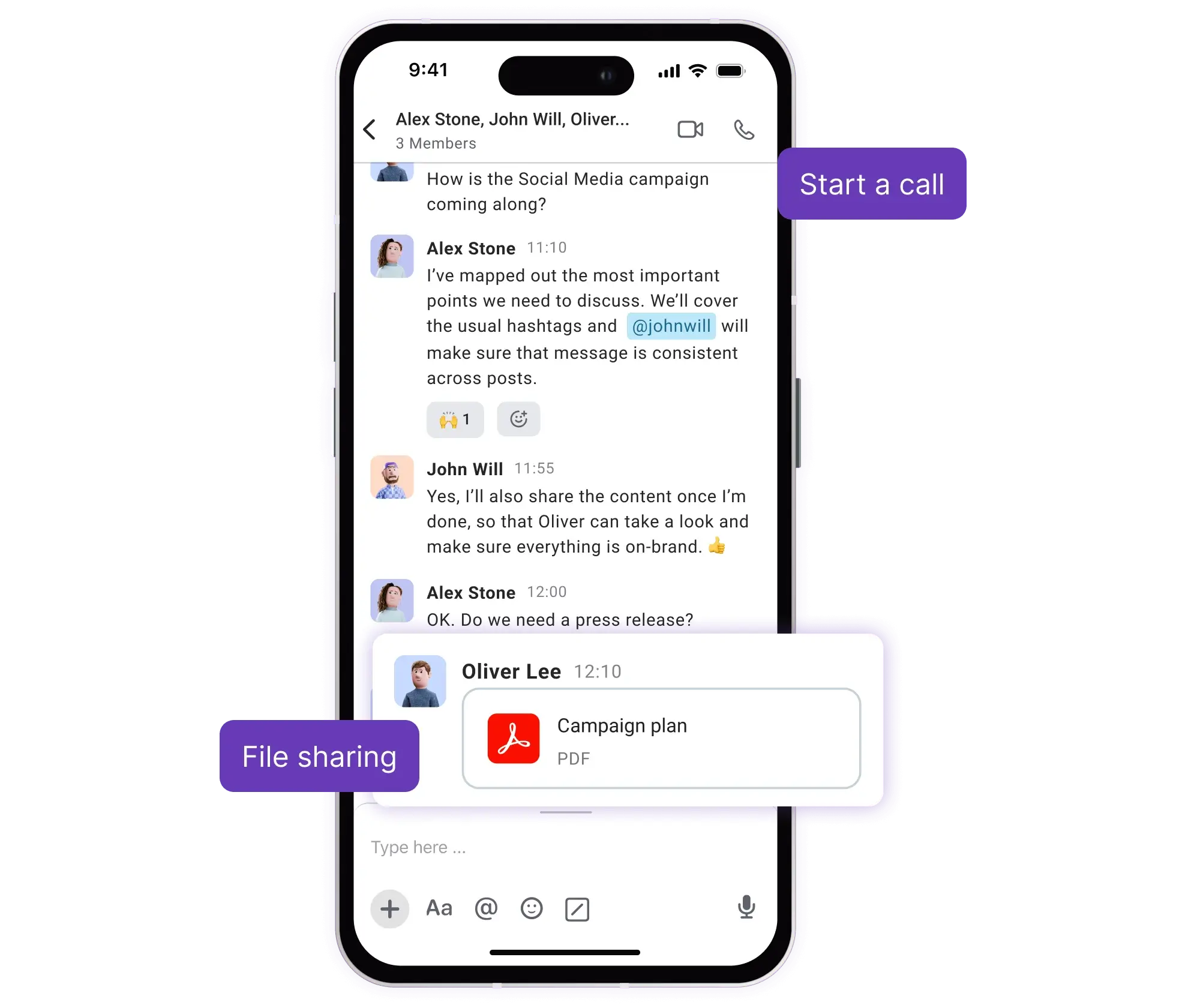
To keep conversations clean and organized, instruct your new team members to use Pumble Threads whenever they need to:
- Follow up on feedback.
- Ask for clarification.
- Check in with their mentor.
Pumble threads and mobile messaging give your employees the flexibility to pick up any conversation right where they left off. This creates a low-pressure space where employees feel comfortable speaking up. Plus, it keeps everyone connected, whether they’re working from the office, from home, or on the road.
Share employee feedback on Pumble

How to scale your team without the onboarding “chat tax”
As your team grows, onboarding naturally gets more expensive, and not just because you’re hiring more people.
Let’s not forget that every new employee needs access to past conversations, decisions, and knowledge to get up to speed.
Unfortunately, with most communication tools, that access comes at a price. Many platforms limit your message history or lock it behind expensive plans. This forces expanding companies to choose between keeping costs under control and giving new hires the information they need to succeed. As a result, teams waste time going through old emails or repeating the same conversations that could have been accessed with a quick search.
Pumble, an all-in-one team communication app, gives every new team member access to an unlimited message history from the start. This means, they can catch up on past projects and find answers on their own. As you add more seats, your onboarding process stays simple and affordable, without any hidden fees or “chat tax” just to access your own company’s knowledge.
Build an onboarding experience with Pumble by CAKE.com and retain talent
Ultimately, your employee onboarding process will be tailored to your company’s needs.
But, no matter what your onboarding process looks like, partnering with a powerful and secure team communication app is sure to help you create an effective onboarding strategy.
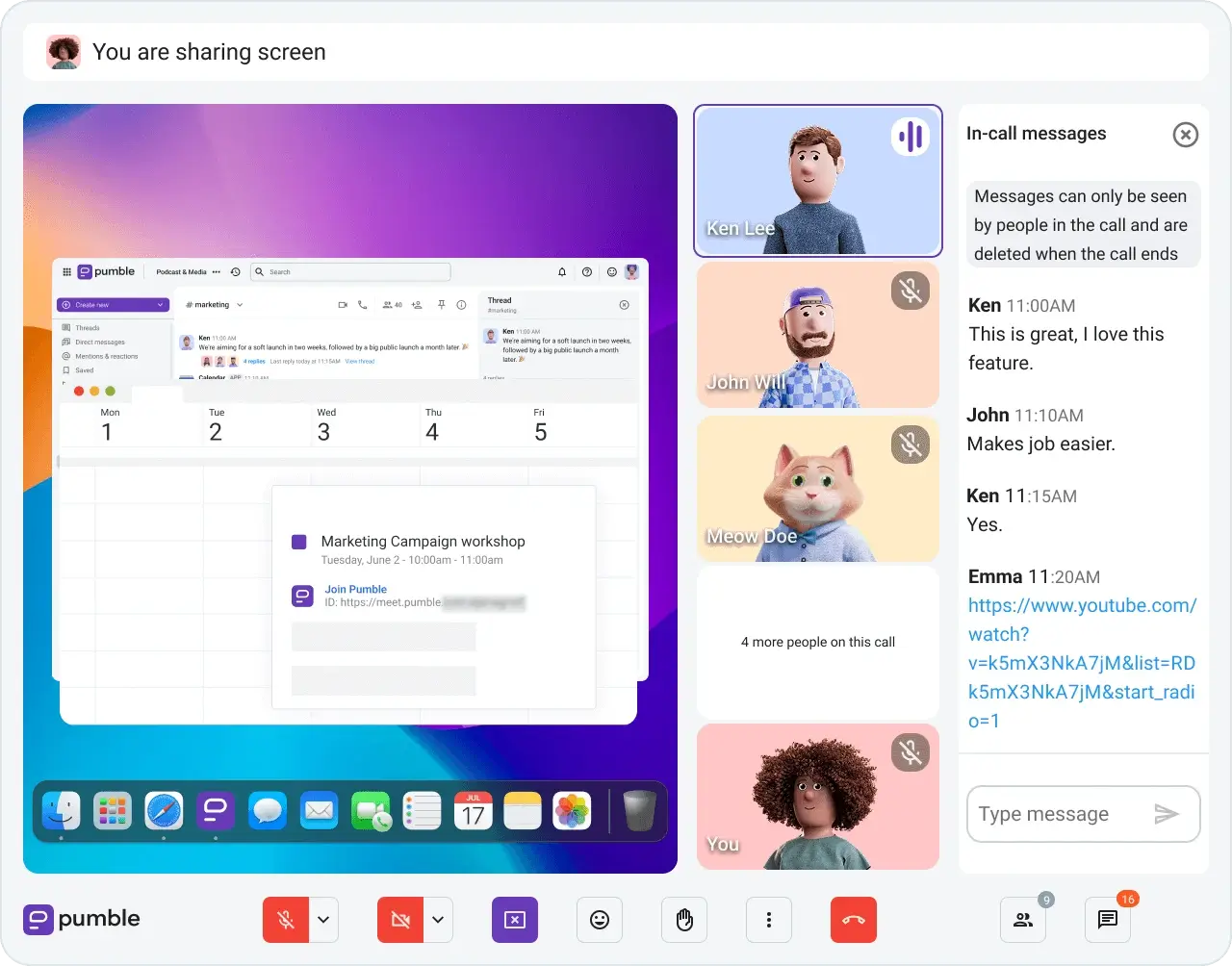
Pumble is an excellent solution for companies of all sizes, as it doesn’t place any limits on the number of users you can have in your workspace.
The paid version of the app will even grow with your company, adding more storage space to your workspace with every new employee that comes onboard.
Pumble helps you create an onboarding experience that grows with your team by combining:
- Communication — in organized channels
- Training — via secure and reliable video conferencing
- Feedback — in channels and threads
- Company knowledge — supported by unlimited file and message history
New employees can find the information they need and connect with their teammates without getting stuck hunting for information across old email chains.
Try Pumble by CAKE.com today and improve your employee onboarding process!
How we reviewed this post: Our writers & editors monitor the posts and update them when new information becomes available, to keep them fresh and relevant.