Communicating and collaborating solely through email used to be the norm.
But, today, relying on email alone means:
- Waiting hours or days for a simple reply,
- Having to fish through 10,000 chains to get past context, and
- Generally not being able to find anything in your overstuffed inbox.
The worst part? Everything is so slow.
You’re probably one “reply-all” email away from selecting “delete all” in your inbox and calling it a day.
But, there’s no need for such rash decisions. Instead, you could make a switch to instant messaging.
It’s quick, flexible, and it enables collaboration rather than sabotaging it.
Today, we’re talking about the top benefits of instant messaging in the workplace and why you should ditch email for good.
Let’s get to it.
- Instant messaging (IM) systems enable immediate written communication between two or more parties.
- The most important benefits of instant messaging in the workplace are that it:
- Provides real-time, instant communication and connection,
- Breaks down information silos,
- Creates a central, searchable knowledge base,
- Reduces email clutter and unnecessary meetings, and
- Fosters a more connected and collaborative culture.
Instant messaging in business communication: A breakdown of benefits
Instant messaging (IM) systems enable immediate written communication between two or more parties.
Now, email does this as well, of course — provided all parties are glued to their inboxes, constantly checking for new emails and instantly replying to them.
But who has that kind of time?
Aside from not leaving much room for immediate, informal communication, email is also quite formal. So, if you need a medium for external communication (like customer communication, for example), email might be the way to go.
But for everyday, one-on-one or group internal communication and collaboration, instant messaging is the way to go because it:
- Provides real-time, instant communication and connection,
- Breaks down information silos,
- Creates a central, searchable knowledge base,
- Reduces email clutter and unnecessary meetings, and
- Fosters a more cost-efficient workforce and collaborative culture.
Let’s take a deeper look into each of these benefits and see how your business could profit from IMs.
#1 Real-time, instant communication and collaboration
Did you know that 2 in 5 employees ignore emails they receive? That’s probably why 43.9% of them claim that sending a message (rather than an email) is a better way to reach them, according to a 2025 Slick Text survey.
Why?
Because email is slow. There’s a lot of waiting around for replies and quite a bit of time lost on searching through email chains for information.
One of the biggest benefits of instant messaging in the workplace is that it’s quick and efficient.
Sending a direct message over an IM app like Pumble by CAKE.com means your coworker will get notified about it instantaneously and be able to respond almost immediately.
This real-time communication and collaboration has multiple benefits, as it allows for:
- Live updates, information, and knowledge sharing — Especially valuable to teams working on tight deadlines who need to be in constant communication with each other.
- Urgent issue resolution — Helpful in times of crisis, when fast action can be the determining factor between success and failure.
- Quick approvals and decision making — Thanks to instantaneous knowledge sharing, managers and leaders can make informed decisions quickly and easily.
Of course, it’s not just direct messages that enable real-time communication. Instant messaging apps also let users:
- Share documents that they can easily find later,
- Make voice and video calls when they need immediate or face-to-face communication, and
- Collaborate as a group in dedicated channels, among other things.
All of this makes communication more effective and efficient, as shown in the Pumble example below.
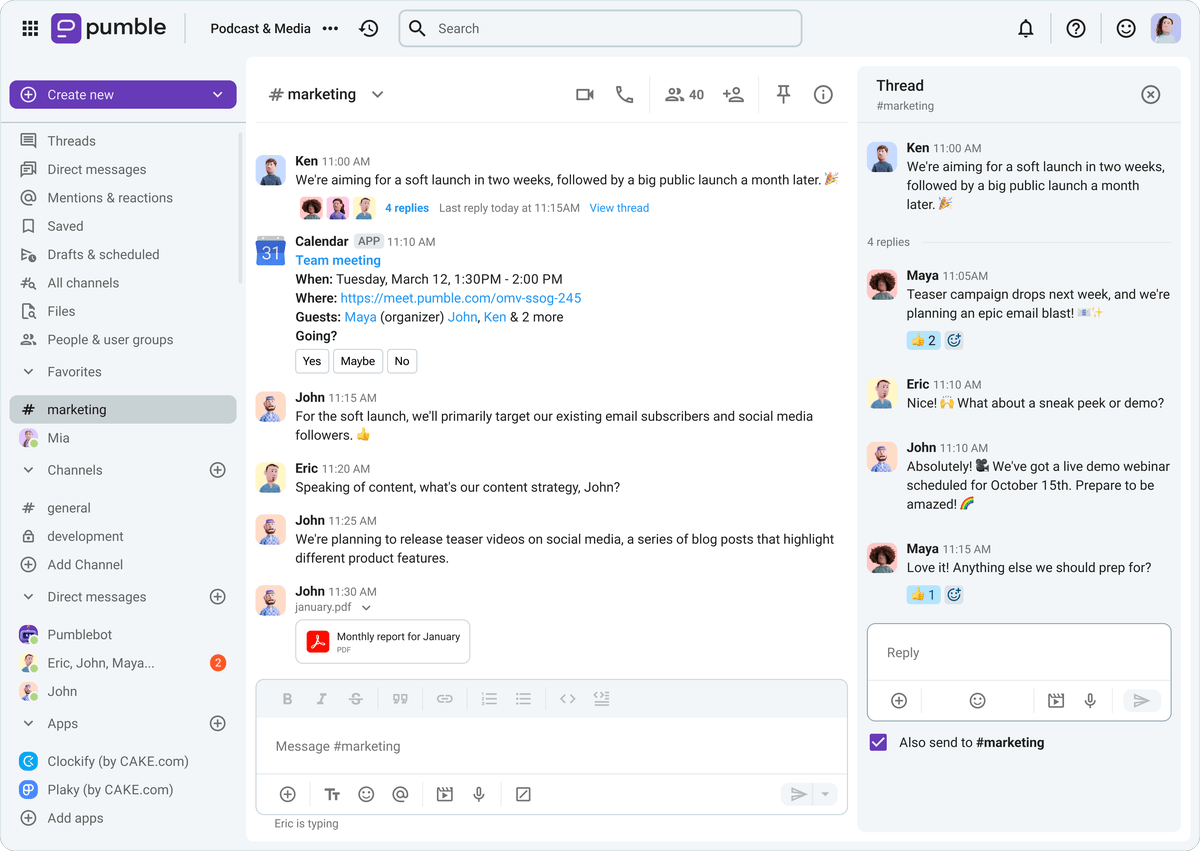
Get things done quickly with Pumble
💡 Pumble Pro Tip
Having access to real-time collaboration and communication tools is just one way to make communication more effective. The rest is up to you and your skills. To learn more about that, read the blog post below:
#2 Breaking down information silos
Communicating through email is bound to create information silos in your organization because it leads to:
- Information hoarding. When you keep specific information — like client data or project details — in specific peoples’ inboxes, communication breaks down completely when those people go on vacation or leave the company.
- Information overload. The volume of incoming emails is often overwhelming, which can lead to avoidance. Aside from that, important emails might not stand out in the sea of other, less relevant correspondence, so they might go unnoticed.
- Limited visibility. Because only the sender and recipients have access to the email chain, a lot of information is trapped. Since other people don’t have access to it, gaps in communication and hindered collaboration become inevitable.
- Fragmented vital data. Gaps in communication can lead to disconnected strategies and duplicate work, which means you might end up with several different versions of the same documents, messages, or briefs floating around your organization. Not having a single source of truth kills both effective communication and productivity.
- Difficult onboarding. If past context is trapped in other peoples’ inboxes, new employees won’t be able to understand what’s been done so far or what’s expected of them.
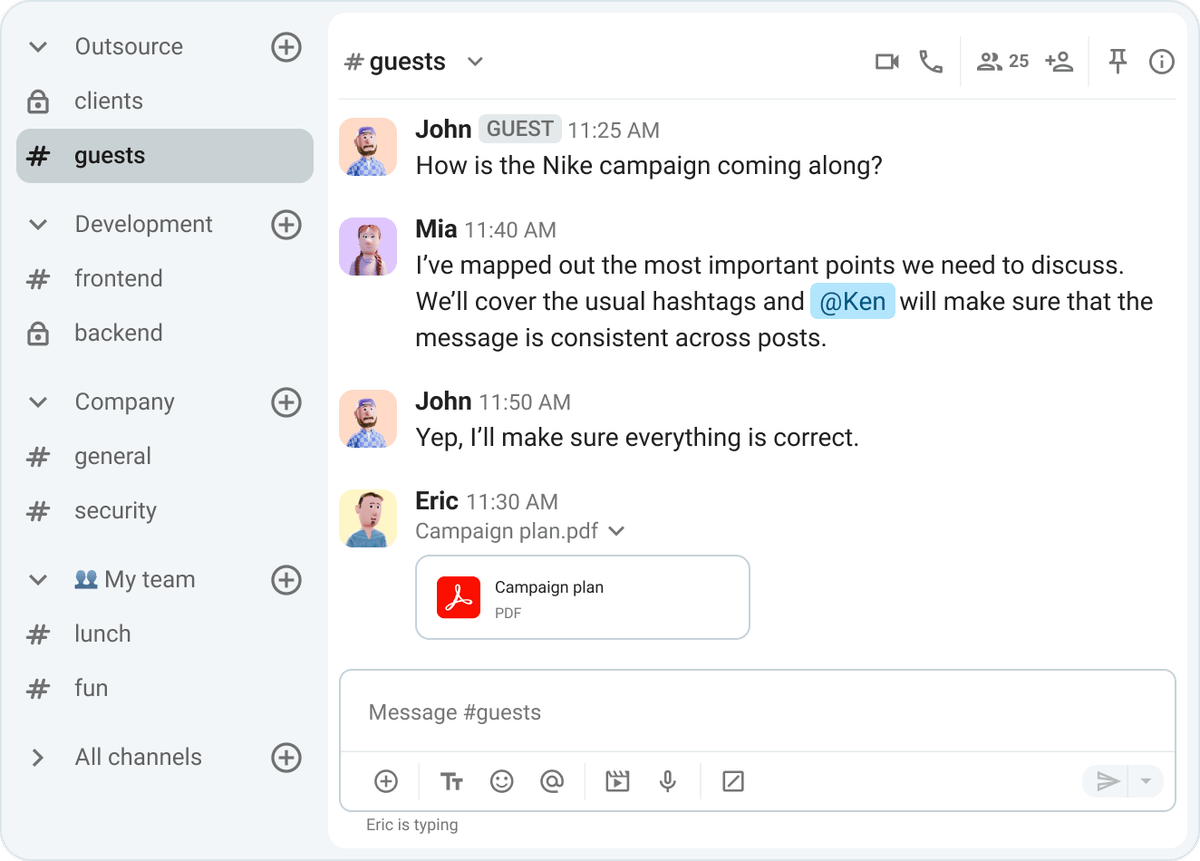
Unlike email, IM fosters transparent communication. For example, Pumble’s public channels make information easily available, ensuring everyone is aligned. You can use them to:
- Share and check updates,
- Ask questions,
- Raise concerns,
- Share files and documents, and
- Search through past context.
With channels where everything is accessible, information silos are impossible. What’s more, this type of transparency builds trust and fosters a positive company culture, among other things.
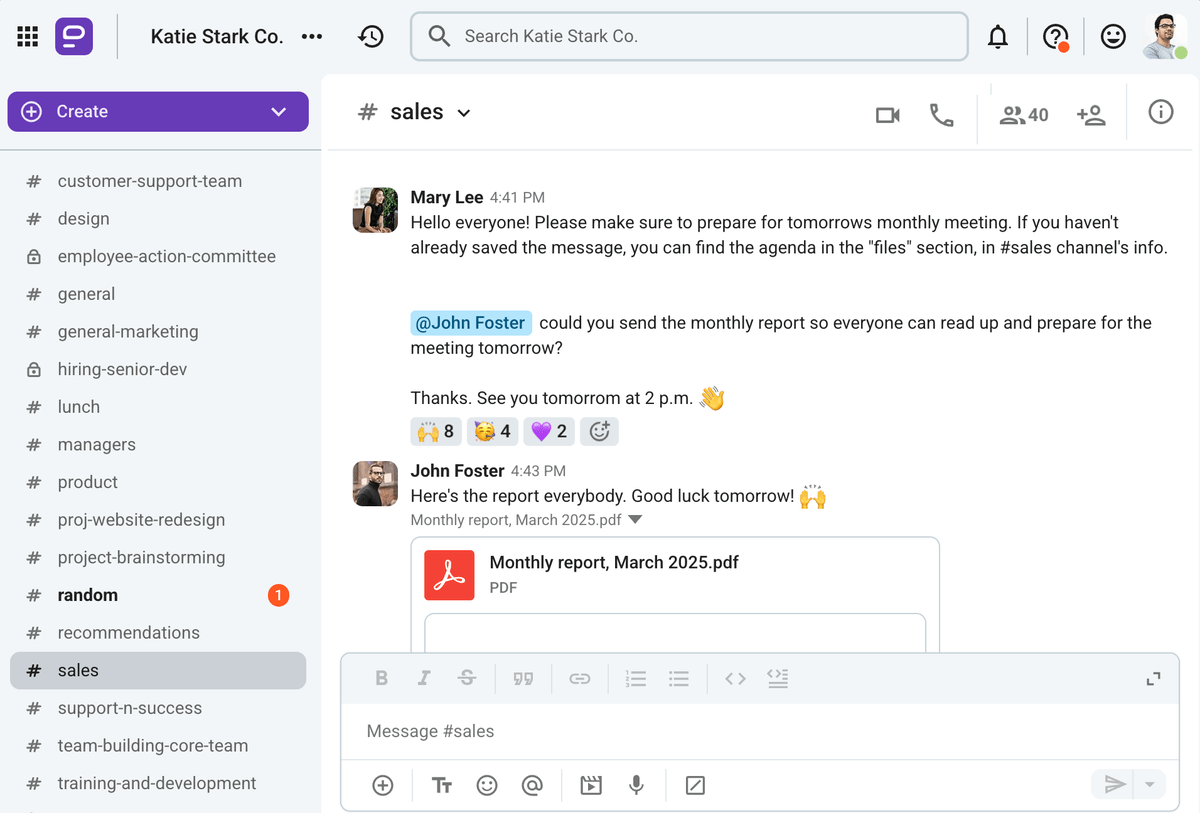
Get rid of team silos with Pumble
#3 Creating a central, searchable knowledge base
According to Microsoft research from 2025, the average worker receives 117 emails every day. So, it only takes a couple of days before email inboxes turn into terrible, unsearchable archives.
Trying to find something shared months ago — or 5,000 emails ago — is mission impossible.
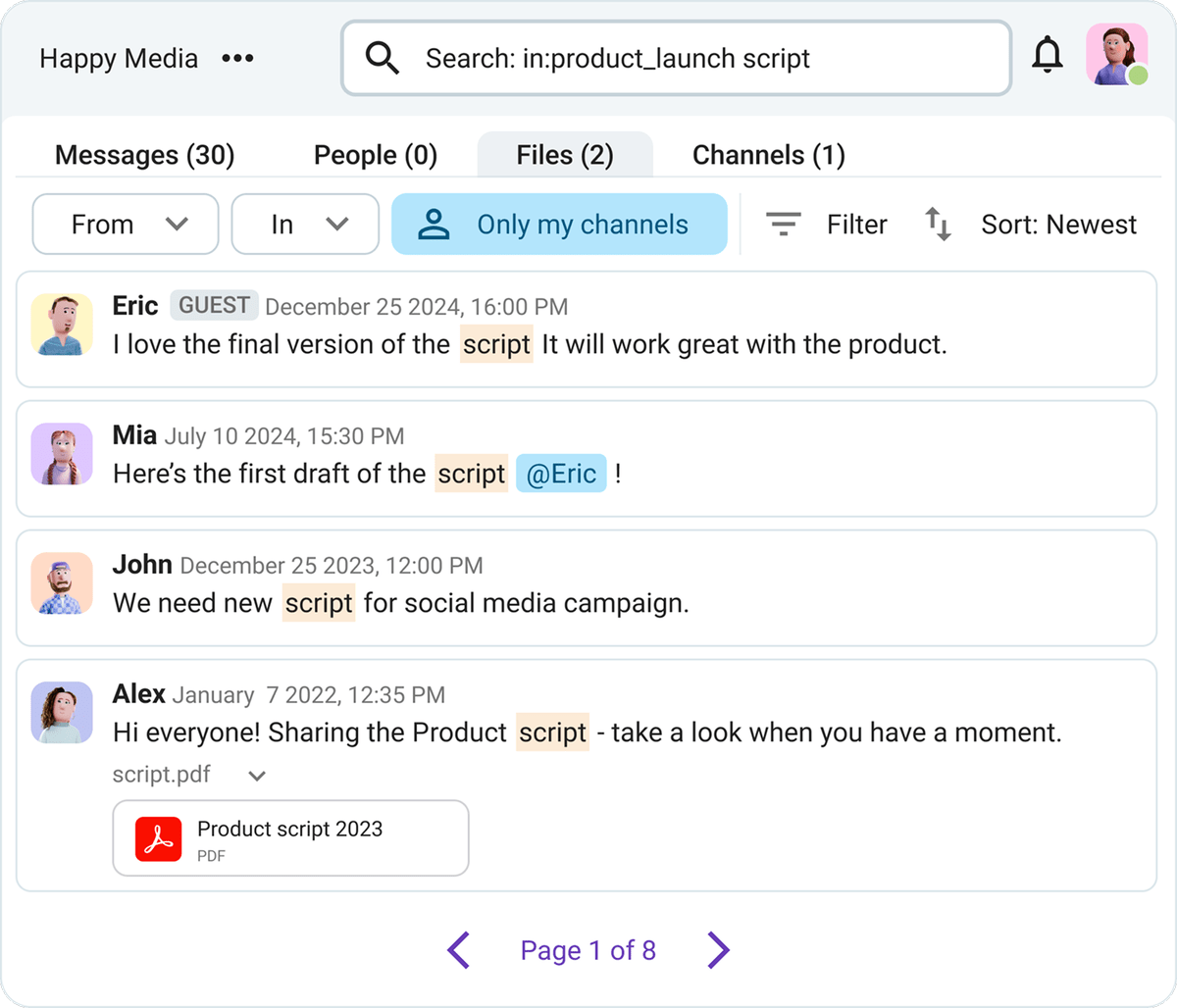
Although the search bar exists in every email inbox, it’s more a tool of torture than anything else, since it will spit out practically anything other than the name, keyword, or file you’re looking for.
The same research shows that the average worker also receives 153 messages over their team communication app. However, instant messaging apps have well-designed built-in record-keeping and search features. Each sent message and shared file instantly become part of your searchable database.
That means that you can use an app like Pumble by CAKE.com to create your permanent knowledge base that will be your company’s single source of truth — a place every employee knows they can search for information, data, or documents.
Pumble offers unlimited message history to all its users, which means you can rely on it to be your digital HQ forever. You can use it to provide information in real time or store it for later use — without forcing everyone to search through endless email chains for it.

#4 Reducing email clutter and unnecessary meetings
If workers get interrupted with emails 117 times every day, it’s no wonder that 48% of employees and 52% of leaders report their work feels fragmented, constantly disrupted, and overall chaotic.
What’s worse, out of those 117 emails, most are annoying reply-all chains that you probably didn’t need to be a part of in the first place or “progress reports” that the senders will repeat to you again during various team meetings.
With IM apps, you can cut down on both emails and unnecessary follow-up meetings with:
- Channels,
- Threaded conversation, and
- Voice and video messages.
For example, you could send your progress reports in your team’s channel, and everyone could take a look at it when it suits them. Plus, you could continue the discussion by starting a threaded conversation.
Threads allow you to keep the conversation going without flooding the main channel with unnecessary messages. They group all relevant replies regarding one topic in one place, so you don’t have to dig through email chains to find it.
What’s more, other people don’t have to scroll through the replies to get to other messages. Everything is neatly tucked under the original message, organized, and understandable.
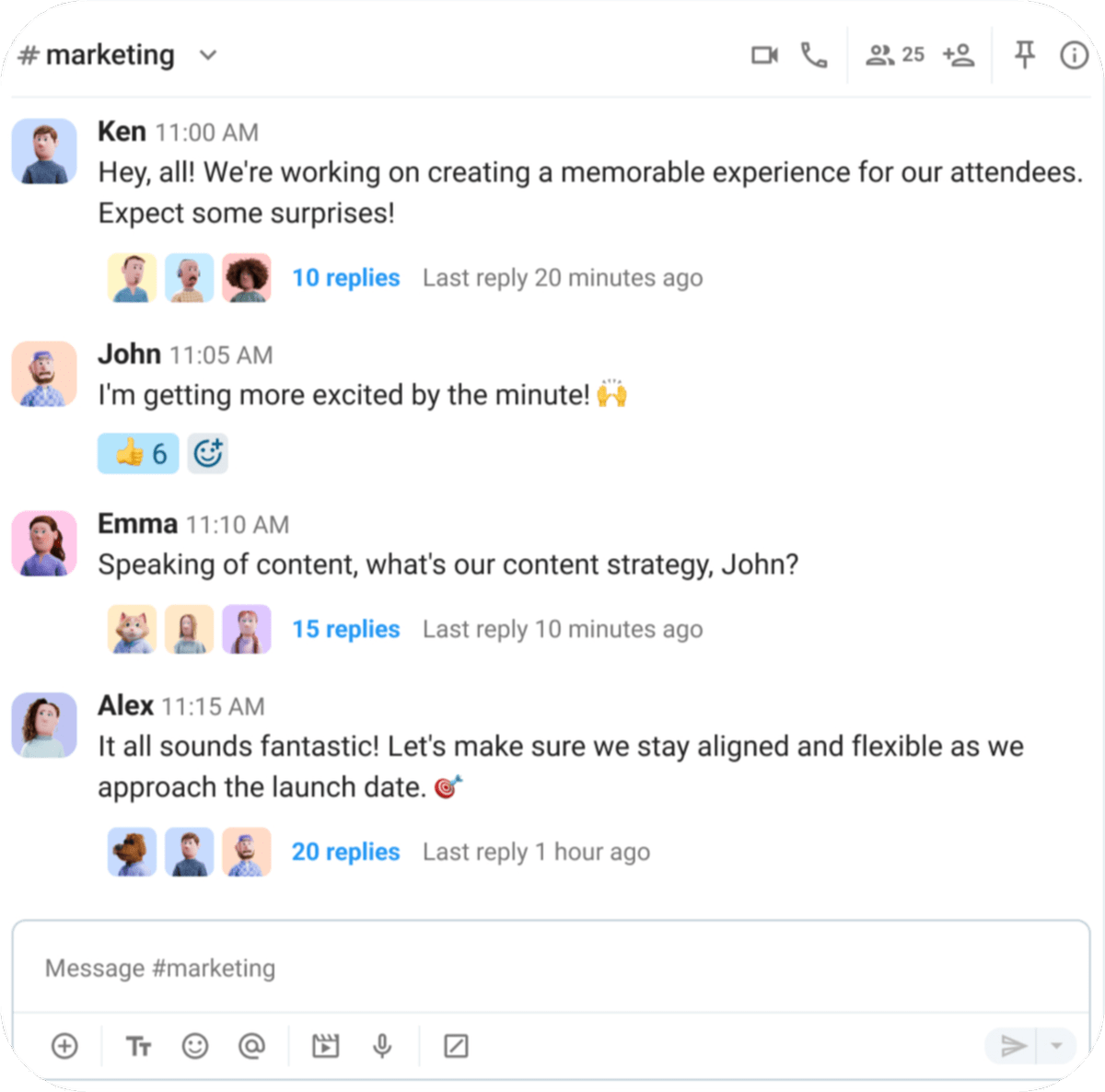
Organize your discussions with threads
And, when it comes to cutting down on unnecessary meetings — something we’re all looking to achieve — IM apps can help there as well.
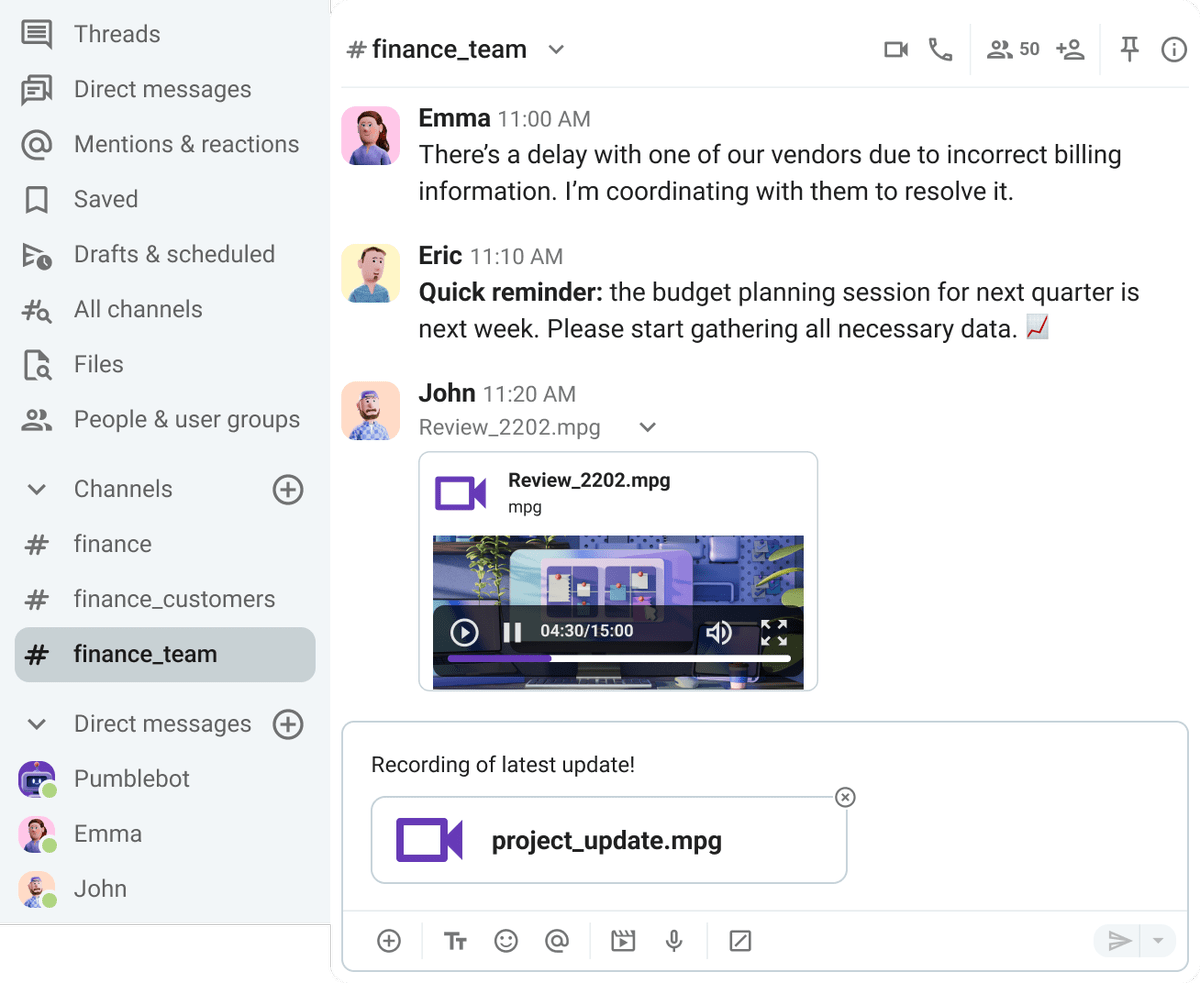
Instead of holding a 30-minute meeting where everyone monologues their updates, people can send progress report voice messages in the channel. Alternatively, if someone is stuck on a problem or has to showcase their work, they can send a video message.
This saves time for everyone — the sender and the recipients — and doesn’t interrupt anyone’s day.
#5 Fostering a more cost-efficient workforce and collaborative culture
If you’re still wondering why you should use instant messaging for work, here’s a simple answer — it saves time. And, as we all know, time is money.
A single employee loses more than 35 days every year due to ineffective communication, according to an Axios HQ study. For employees that earn $50,000–$100,000, this comes up to $10,140 in salary loss per employee.
With IM apps, your team communication becomes more efficient and, thus, less costly.
But that’s just one way IM apps can save you money. If you look a bit closer, you’ll see that they increase connectivity in the team and boost collaboration, which, in turn, is great for your bottom line.
Creating one centralized space for discussions — like channels — helps employees engage in productive business communication and stay on task. This encourages active collaboration, as it allows all team members to provide their input or feedback.
What’s more, because of their immediate and informal nature, IM apps can also help teams build better relationships. Where email is too formal and rigid, IM apps allow coworkers to connect instantly, share ideas, and build rapport.
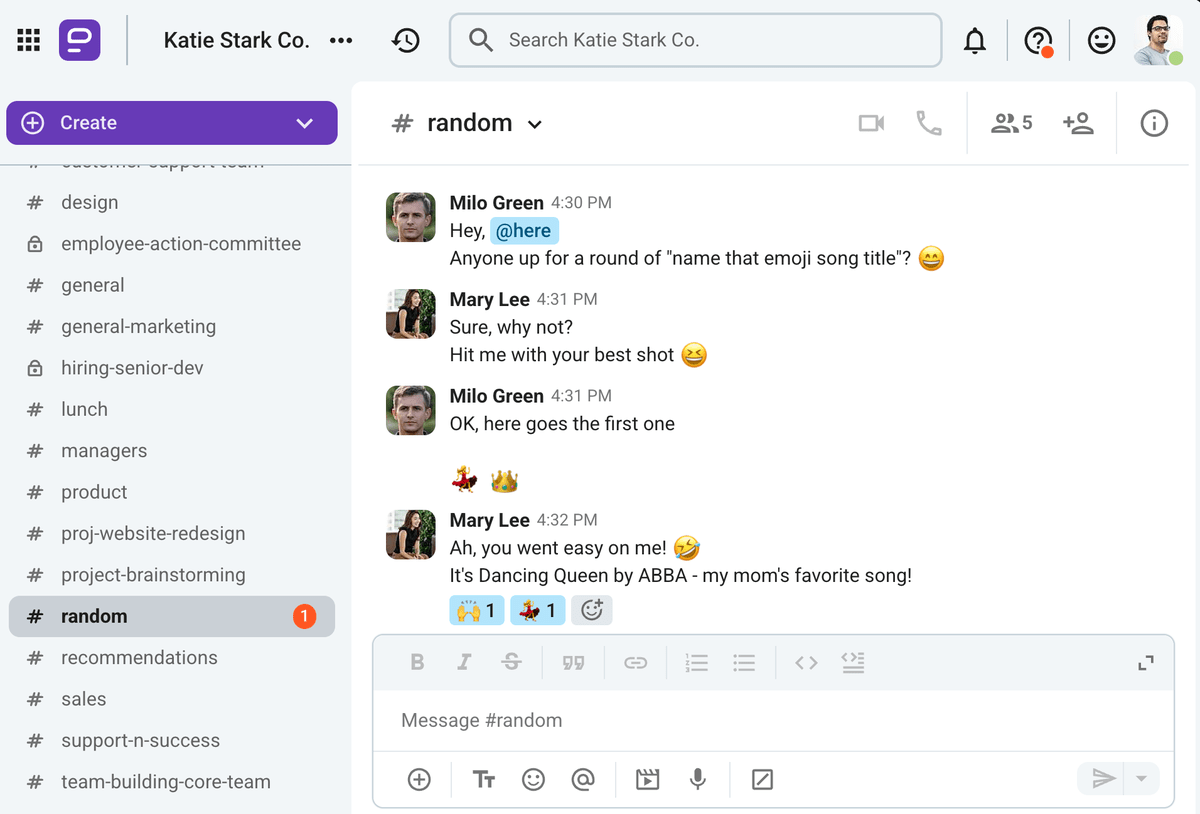
For example, informal channels — like the #random channel on Pumble — are great spaces for casual chit-chat, where employees can connect on a more personal level.
Other features, like the emoji reactions, help further build this rapport and add a much-needed human touch to business communication without unnecessarily wasting time.
All of this is excellent for building positive team dynamics.
Potential pitfalls of instant messaging in the workplace
Although there are clearly amazing benefits to implementing instant messaging in business communication, IM apps aren’t without their faults.
Do you remember us mentioning that, while the average person gets 117 emails a day, they also get 153 messages on their IM apps?
Well, just because those messages are neatly organized into channels and easy to skim through, doesn’t mean they can’t be distracting.
Constantly getting pinged while trying to focus on deep work isn’t easy.
Notifications from IM apps are a necessary evil. They help us stay on top of the information flow and even improve our productivity. According to Pumble’s 2025 Workplace Communication Statistics, employees who feel included in more detailed workplace communication are almost 5 times more likely to report increased productivity.
But you can’t be included without being on the receiving end of a few hundred notifications, which can lead to notification fatigue.
Luckily, IM apps also give us a way to get around this problem. Apps like Pumble by CAKE.com offer features that let you create communication strategies for your team that will help keep productivity at its peak and notification fatigue at bay.
One of the best strategies is to encourage asynchronous communication that allows everyone to work and communicate on their own time.
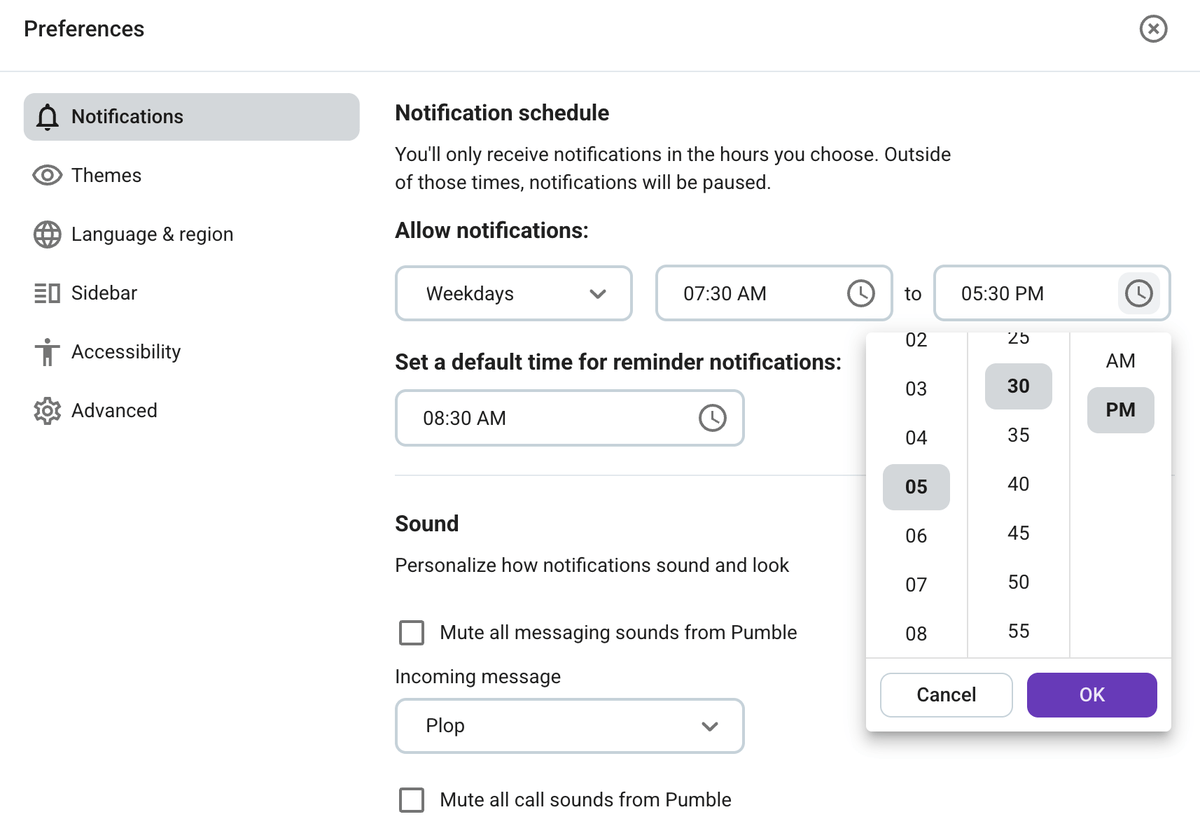
You can implement this strategy by creating a notification schedule, for example, which can help you minimize distractions and prioritize work that really matters. To further protect your focus, you can also mute specific channels that aren’t relevant to your daily work or even turn on the Do Not Disturb mode.
That way, you can focus on your work and communicate at a time that suits you.
Make the switch to a smarter collaboration hub — try Pumble by CAKE.com
The benefits of instant messaging in business are undeniable.
By building trust and providing space for interactive communication, IM improves the collaboration and social relationships at work. This effect cascades into increased employee productivity and satisfaction, which is great for your bottom line.
With the right tool, you can enjoy all the benefits of instant messaging in the workplace and see your team and organization thrive once the email inboxes deflate and leave people with enough time and energy to actually do their work.
To get the best of what instant messaging has to offer, try Pumble by CAKE.com — an all-in-one business communication app, designed to simplify your communication and connect your team.
Build your communication and collaboration hub and say goodbye to inefficient emails!
How we reviewed this post: Our writers & editors monitor the posts and update them when new information becomes available, to keep them fresh and relevant.