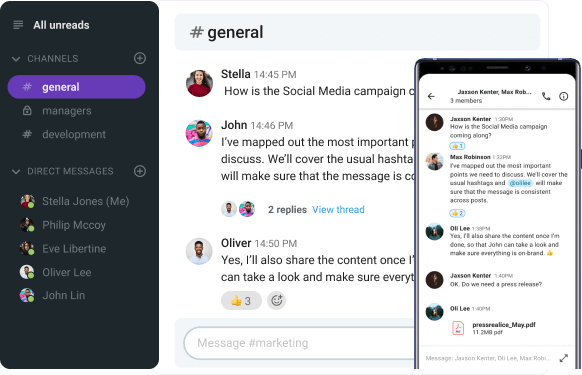
In 2026, the choice between Pumble vs Flock comes down to how your team manages growth and information.
While both platforms are a great alternative to email, the limitations in their free plans mean you’ll have two different experiences trying to scale your business when using them.
Flock is often praised for its built-in productivity tools like shared to-dos and polls, which is why micro teams with a lot of tasks tend to favor it.
However, Pumble by CAKE.com has redefined the market by offering unlimited message history and unlimited users on its free plan, ensuring that your company’s internal knowledge is never locked behind a paywall.
This updated comparison breaks down the 2026 features, pricing plans, security, and administrative controls of these two apps.
Let’s dig in.

Why trust us?
Human reviewers try out each app and follow strict guidelines while writing about the comparisons. We follow a transparent, clear, and systematic methodology, so that every review is objective and accurate.
Pumble vs Flock: Main features comparison
Both Pumble and Flock aim to keep teams connected, organized, and productive.
At first glance, they might seem similar, but once you take a closer look at what their free plans offer, the differences become clear.
Pumble’s free plan includes:
- Unlimited users,
- Unlimited channels, and
- Unlimited message history.
This means your team can grow without worrying about hitting any limits.
In comparison, Flock’s free plan is much more restrictive. It lets you host only:
- 20 users,
- 10 public channels, and
- 10,000 searchable messages.
For small teams, these limits might not seem too bad at first, but they can quickly force you into a paid upgrade as your team expands.
When you dig deeper, aside from free plan limitations, 3 other key differences stand out:
- Price — Pumble is nearly half the price of Flock. When billed annually, Pumble’s Pro plan is $2.49 per user per month, whereas Flock’s is $4.50 per user per month.
- Storage — Pumble free plan users have 10 GB of storage per workspace — double what Flock offers (5 GB). And, as you upgrade, Pumble continues to scale storage more generously (up to 100 GB), while Flock caps its Enterprise plan at 20 GB per user.
- Audio & video communication limits — Pumble offers both 1-on-1 video and voice calls to its free users, while Flock only supports 1-on-1 video calls. Paying users can host 50 or 100 participants on voice calls in Pumble (depending on your plan), while upgrading in Flock means you can only host up to 20 participants (on all plans).
Here’s a more detailed overview of how their main features compare side by side.
| Features | Pumble by CAKE.com | Flock |
|---|---|---|
| Pricing | – Free (unlimited users) – Pro: $2.49 per seat per month, billed annually – Business: $3.99 per seat per month, billed annually – Enterprise: $6.99 per seat per month, billed annually | – Starter: Free (up to 20 users) – Pro: $4.50 per seat per month, billed annually (up to 100 users) – Enterprise: quote upon request (for organizations with 100+ users) |
| Interface | – Clean – Intuitive – Easy to navigate – Customizable sidebar and themes | – Cluttered – Hard to navigate – Limited customization options |
| Communication | – Direct messages – Channels – Threads – Video & voice calls – Screen sharing – Video & voice messages – Guest access | – Direct messages – Channels – Replies – Video & voice calls (limited) – Screen sharing – Voice messages (on mobile) – Guest users |
| Notifications | – DND and pause notifications – Muting channels/DMs – Custom notification schedules – Reminders | – DND and pause notifications – Muting channels/DMs – Limited customization options – Reminders |
| Search | Advanced | Advanced |
| File sharing | – Up to 512 MB on web (on all plans) – Up to 256 MB on mobile (on all plans) | – Up to 100 MB (on all plans) |
| Storage | – 10 GB of storage per workspace (free plan) – 10 GB of storage per user (Pro plan) – 20 GB per user (Business plan) – 100 GB per user (Enterprise plan) | – 5 GB total per team (Starter plan) – 10 GB per user (Pro plan) – 20 GB per user (Enterprise plan) |
| Integrations | – Core apps like Gmail, GitHub, Google Calendar, Zapier – Clockify and Plaky | 60+ integrations |
| Support | – 24/7, 100% human support (email, chat & phone), even on the free plan – Dedicated success representative for paid plans | – Self-service resources on the Starter plan – 24/7 priority support on the Pro plan – 24/7 dedicated support on the Enterprise |
| Security | Advanced | Advanced |
Now, let’s break down each feature so you can decide which app works best for your team.

Pumble vs Flock: Pumble offers a free plan that grows with your team
Spoiler alert — only one app is truly built to grow with your business, and it’s not Flock.
Let me elaborate.
Pumble offers a generous free plan that lets your team work, expand, and stay connected without limits. It’s a toolbox built with a purpose, which means it has several notable features that will make your work life easier:
- Unlimited users and channels — Pumble supports channel-based communication, so you can invite as many teammates as you want and create as many spaces for discussion as you need.
- Unlimited message history — Never lose access to past conversations, decisions, or files.
- 10 GB of storage per workspace — Share files, documents, and images freely, without fearing you’ll run out of space too quickly.
- Threaded conversations — Keep discussions organized and avoid cluttering the main feed.
- 1-on-1 video and voice calls — Hop on a quick call without needing a separate app.
- Video and voice messages — Leave updates and explanations when text communication just doesn’t cut it.
- 24/7 human support — Get help from real people whenever you need it, at no extra cost.
In my opinion, Pumble’s free plan is an ideal choice for startups or smaller teams that aren’t ready to invest in their communication app just yet. It provides everything you need to collaborate effectively and stay productive without holding you back.
Scale with no limits — try Pumble
In contrast, Flock’s free plan imposes strict limits that keep it from being a long-term solution. It includes:
- Up to 20 users,
- 10 public channels,
- No private channels,
- No audio conferencing (outside of India),
- 5 GB of storage per team,
- 1-on-1 video calls, and
- 10,000 searchable messages.
So, what happens when your team gets its 21st member? Or when you need to make a private channel for decision-makers?
Well, you’ll have to pay, of course.
As your team grows, Flock’s free plan forces you to upgrade to a paid tier sooner than you’d like — making it less of a free plan and more of a stepping stone to a subscription.
What’s more, you’ll have to do all of this by yourself, as Flock only allows one admin per workspace.
Meanwhile, Pumble lets you share the load of admin control and assign multiple people to help you manage users, create and manage channels, and handle invitation permissions.
Pumble vs Flock: Pumble’s paid plans deliver more for less
In terms of Pumble vs Flock pricing, it’s clear as day that Pumble is cheaper.
What’s more, Flock is even more expensive than it might seem at first glance because it has additional long-term expenses that aren’t immediately reflected in its price.
For example, as mentioned, none of its plans include video conferencing for more than 20 people. That means that, if you want to hold meetings with more than 20 people, you’ll have to pay for a separate video conferencing solution. You’ll also have to switch apps every time you want to hold a meeting — something I find infuriating, as it completely breaks my focus.
Meanwhile, Pumble’s paid plans stand out for their flexibility and affordable pricing.
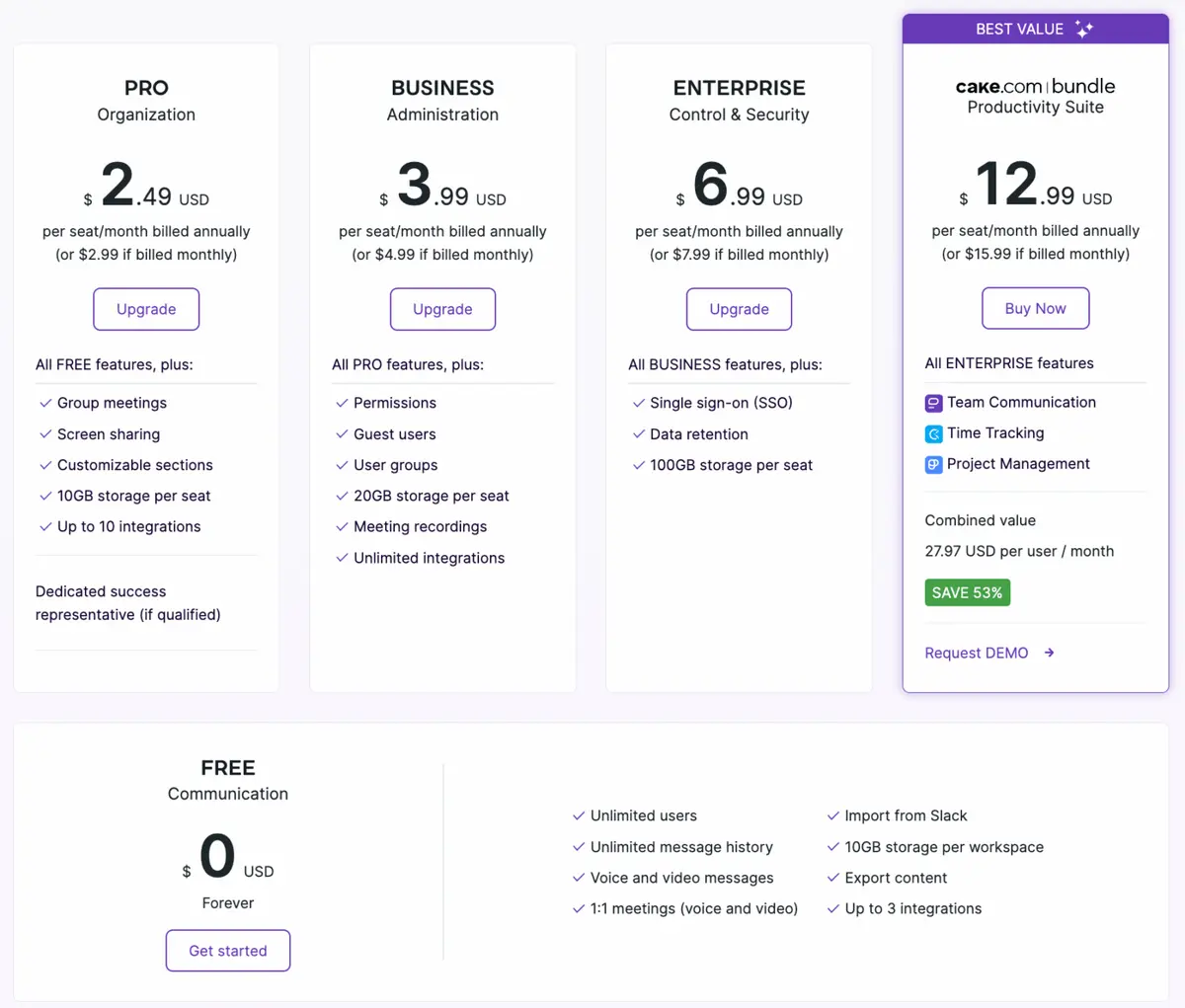
What I like most about Pumble’s pricing structure is that it’s affordable and scalable.
Pumble’s cheapest plan — the Pro plan — offers stellar features for any growing team. Even so, Pumble included two additional plans that provide more administrative control and security into its offer — all at reasonable prices.
Get more, spend less — pick Pumble
Flock, on the other hand, only has two plans — one at a fixed price of $4.50 per user per month, and another one that has a custom price depending on the size of your team.
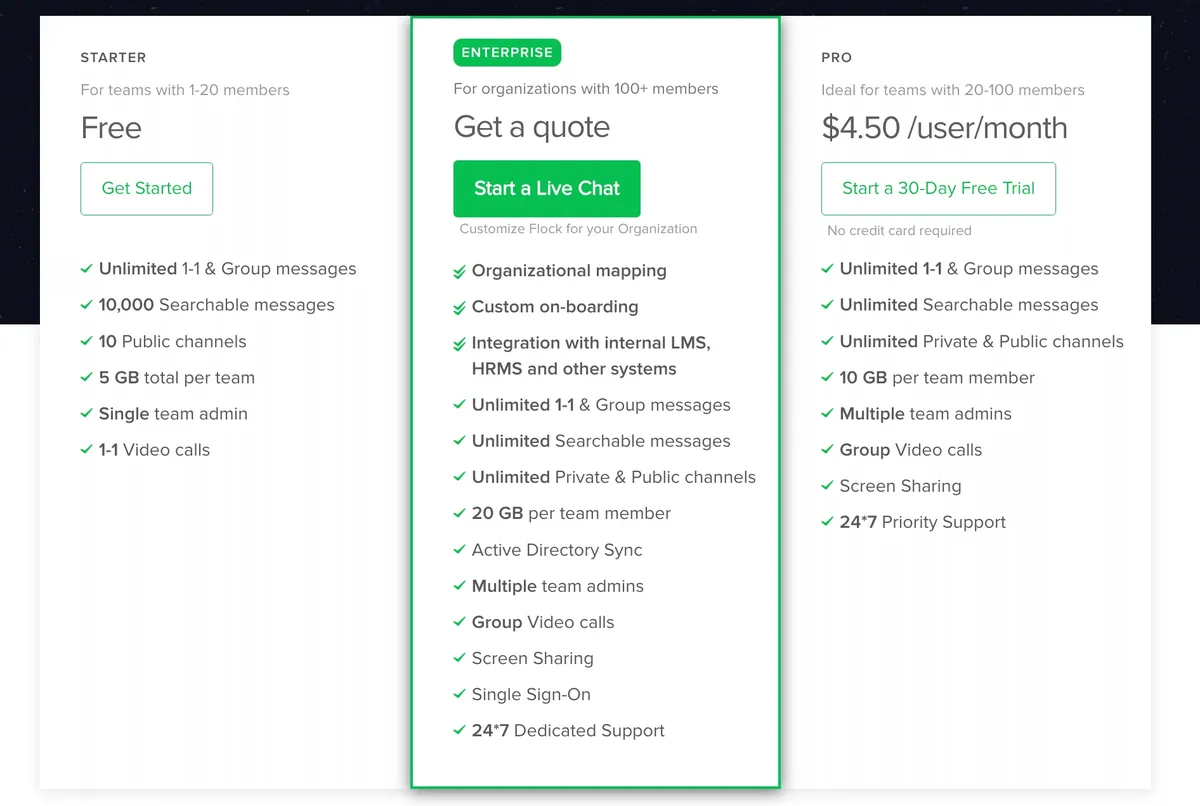
I’m not a fan of this because it feels like Flock goes out of its way to be nontransparent. Why make me jump through hoops to find out the price?
Upgrading to a paid plan in either app can be a worthwhile investment if your team needs it. But for $4.50 per user per month (billed annually), with limitations like a maximum of 100 members and group calls capped at 20 participants, Flock could never come up on top.
I’d rather pay $2.49 for Pumble and get more than that.
With Pumble, you skip the limits and enjoy a better user experience. Not to mention, Flock requires you to upgrade to a paid plan just to access all of your messages and unlock unlimited channels, while Pumble gives you unlimited members and unlimited history even on the free plan.
Overall, Pumble’s pricing offers better scalability and value, while Flock’s plans feel restrictive and overpriced in comparison.

💡 Pumble Pro Tip
Flock’s plans leave a lot to be desired — much like Slack’s. But how do the two compare in other categories? Who would win in the battle of Flock vs Slack 2026? Find out in our full comparison below:
Pumble vs Flock: Pumble’s interface is more intuitive and easier to navigate
The design and UI is another area where the two apps differ significantly.
Personally, I prefer a modern, clean layout where most (if not all) tools are in one place, easy to access, and simple to navigate.
Flock, unfortunately, doesn’t quite hit the mark.
I found its interface to be dated and cluttered, with chats placed on the left sidebar while things like the directory, files, and favorites are tucked away in the app launcher on the right.
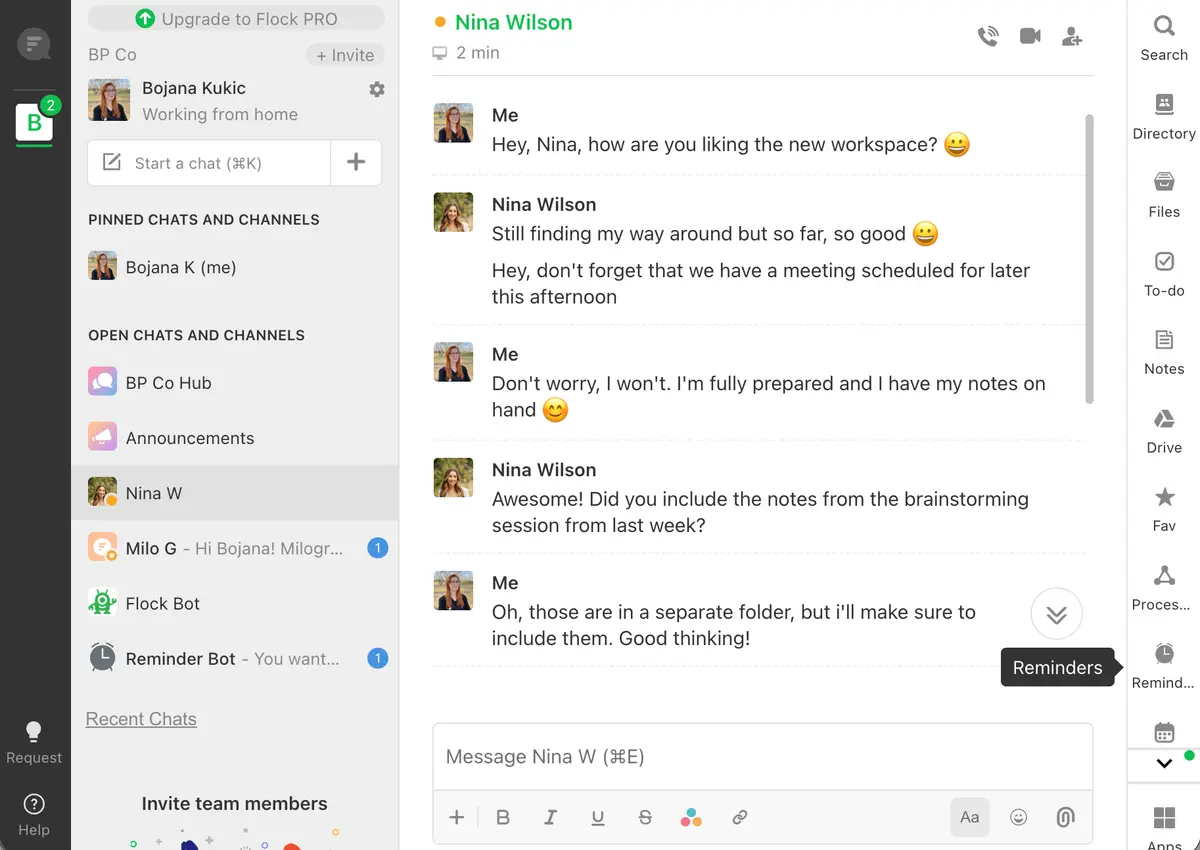
Additionally, sidebar customization is not available, and the app only offers a light and dark theme.
The only adjustable display option is chat density, which does little to simplify navigation.
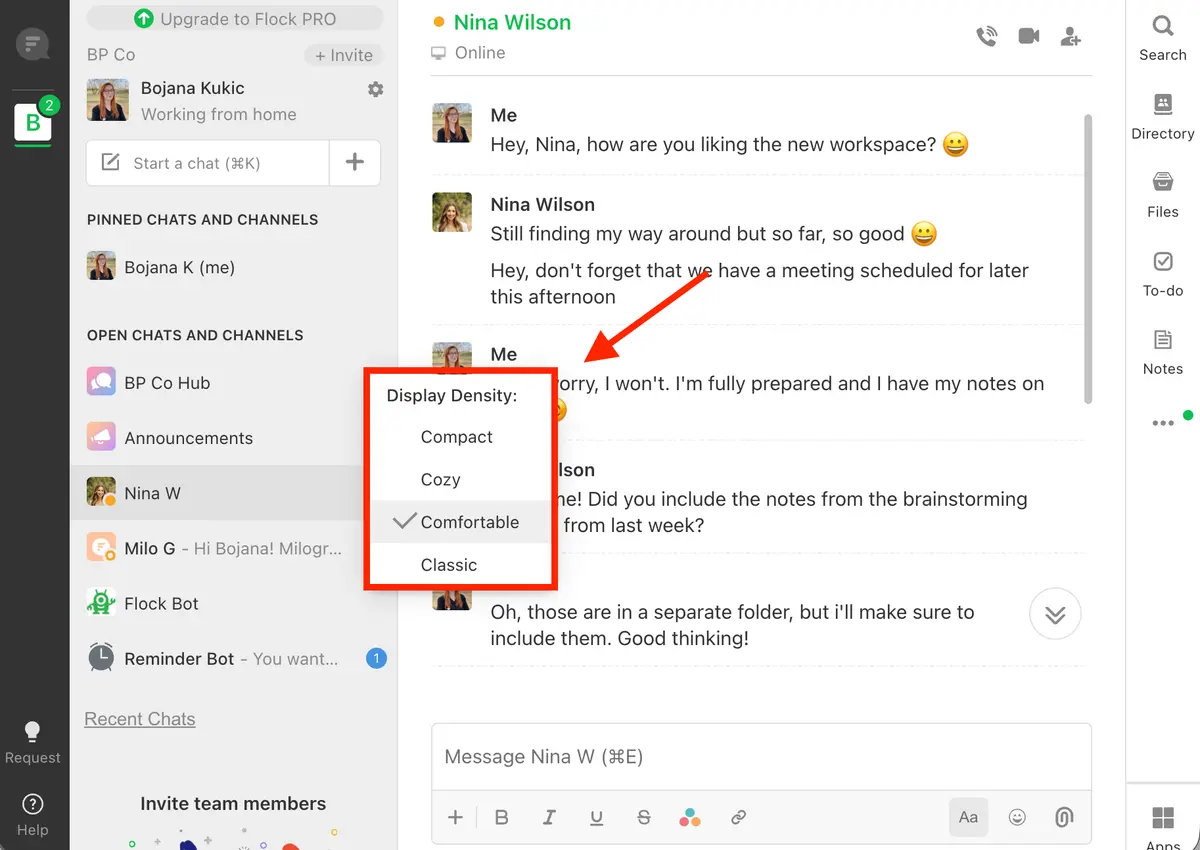
While testing Flock, I found myself exploring more than I expected. I even had to read up on where some features were located. If your team were to adopt Flock as their main communication tool, some onboarding would definitely be required.
Pumble, in contrast, offers a clean, intuitive interface, where everything you need is a click away.
The sidebar has all of your channels, direct messages, mentions, drafts, files, and people in one view. You can keep everything maximized and have instant access to all channels, DMs, and apps. Or you can collapse everything, just like I did in the image below.
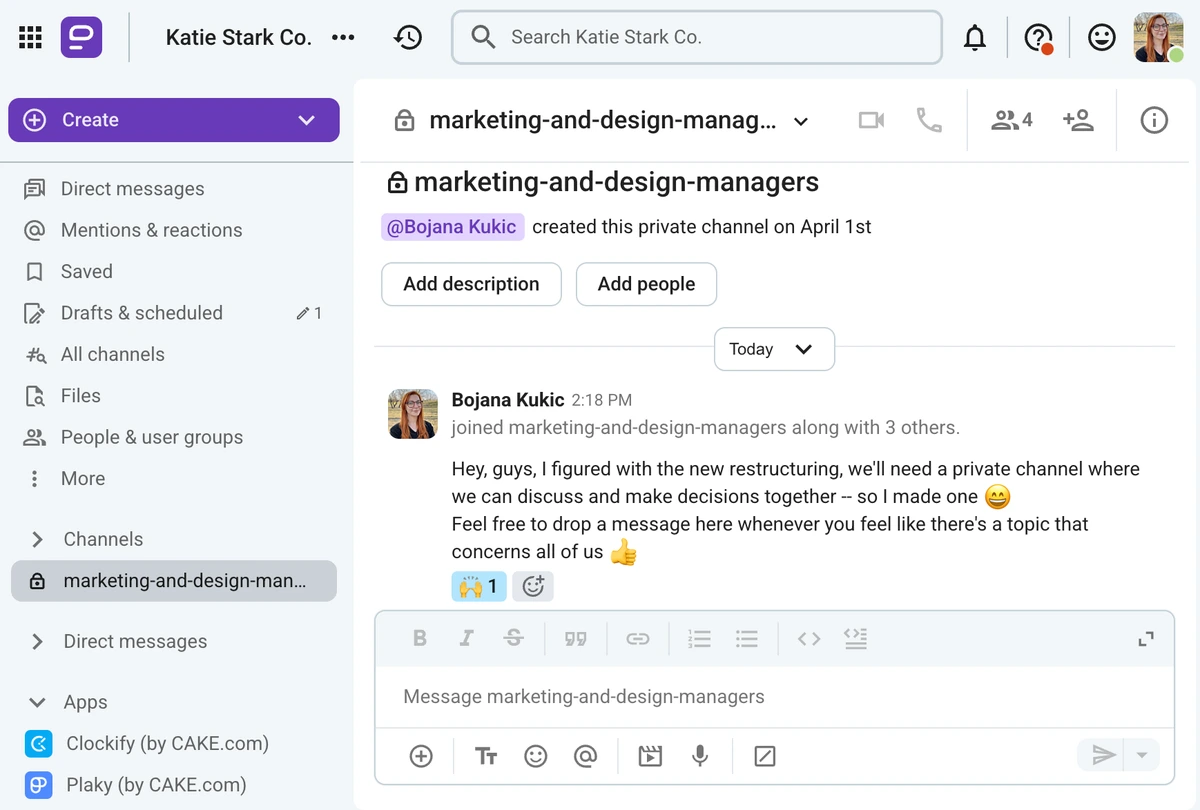
You can also customize the sections in the sidebar to fit your workflow — for example, I like to group channels by project and hide the sections I don’t use often. It keeps my workspace organized.
On top of that, Pumble gives you more options for personalizing its appearance. You can choose between light and dark themes and pick from 10 different color combinations.
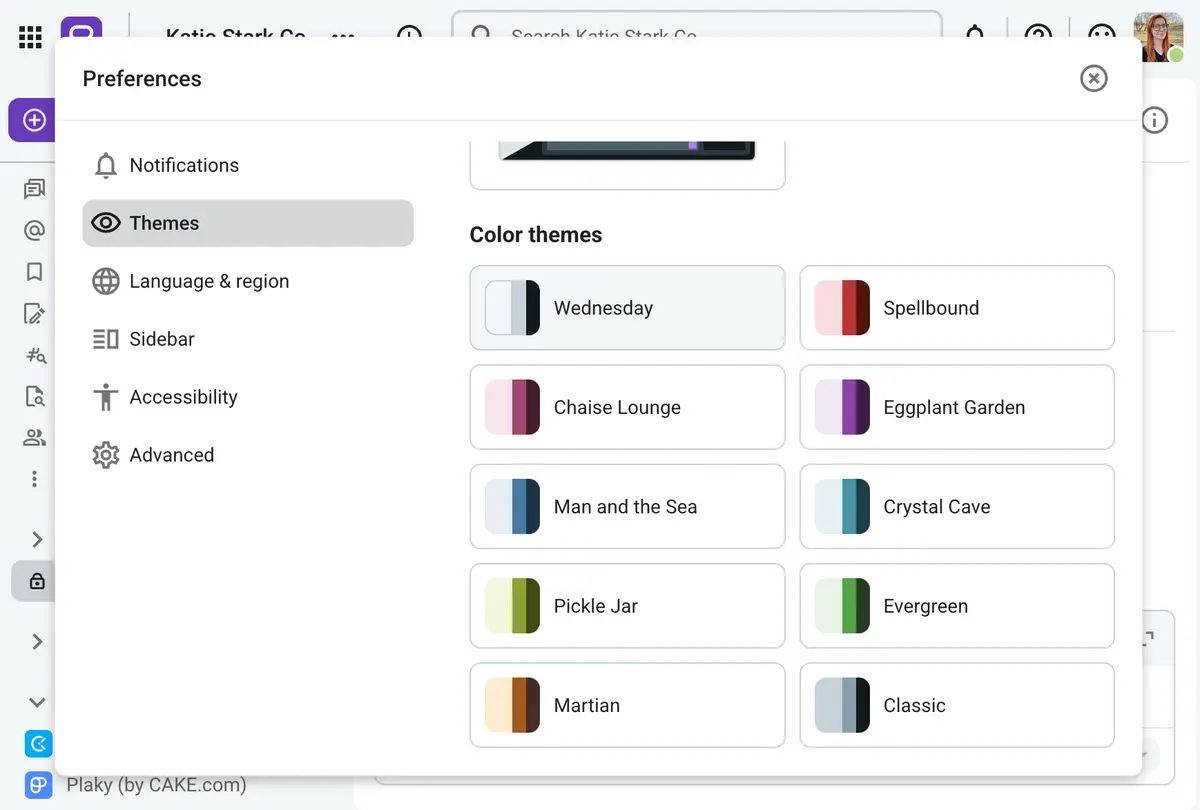
Overall, I much prefer Pumble’s interface over Flock’s. Its sleek look, thoughtful layout, and easy navigation make it simple to stay productive.

Pumble vs Flock: Pumble has more versatile communication features
Although similar in their purpose and target audience, Pumble and Flock have some notable differences when it comes to the communication and collaboration features they offer.
Threads vs replies: Making daily communication easier
Like all good instant messaging apps, both Pumble and Flock support direct messaging, file sharing, and mentions and reactions. But, there are a few areas where Flock falls short.
For starters, Flock’s free plan limits you to:
- 10 public channels,
- No private channels, and
- 10,000 searchable messages.
By contrast, Pumble doesn’t put a limit on any of those elements.
Flock also lacks Pumble’s useful threaded conversations, which help discussions stay organized and easy to follow.
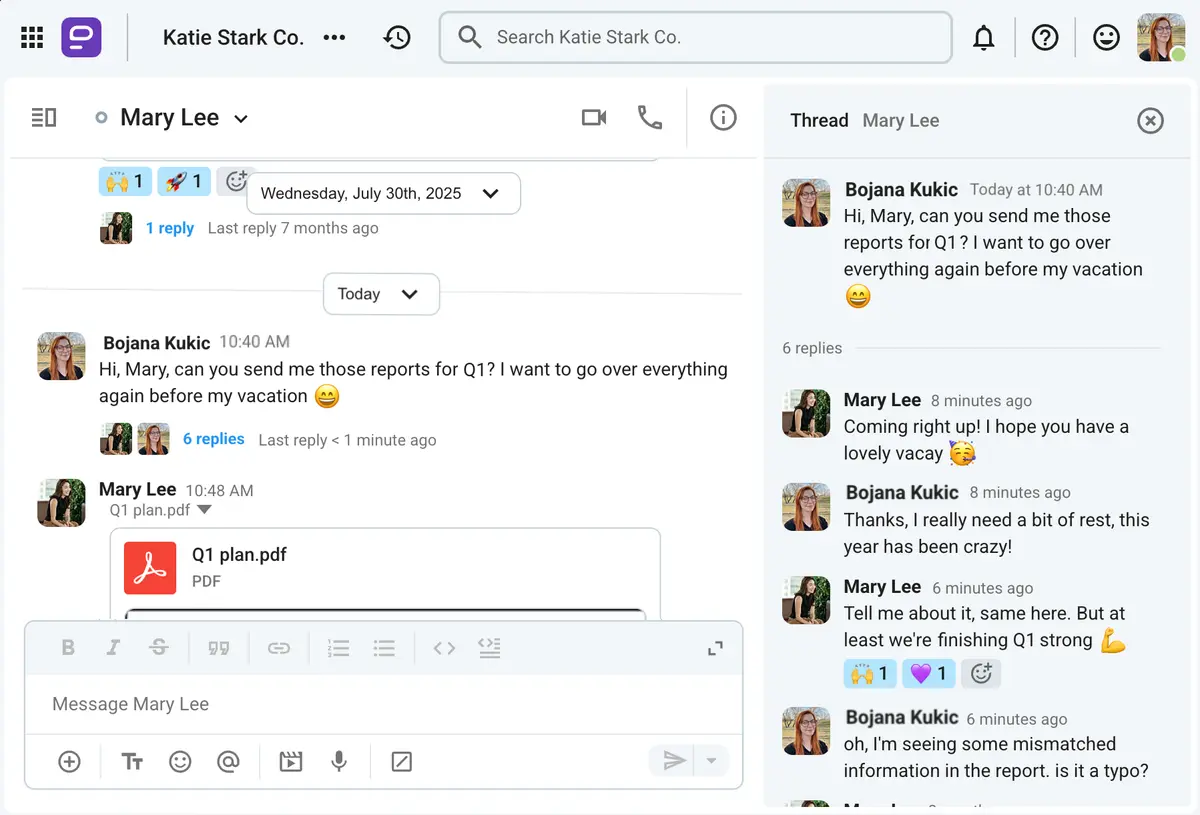
And if you’re scared people will miss information or that something will get buried in a thread, you can always reply in a thread and select the “Also send to channel” option. That way, your reply will appear both in the channel and in the thread, clearly visible to all.
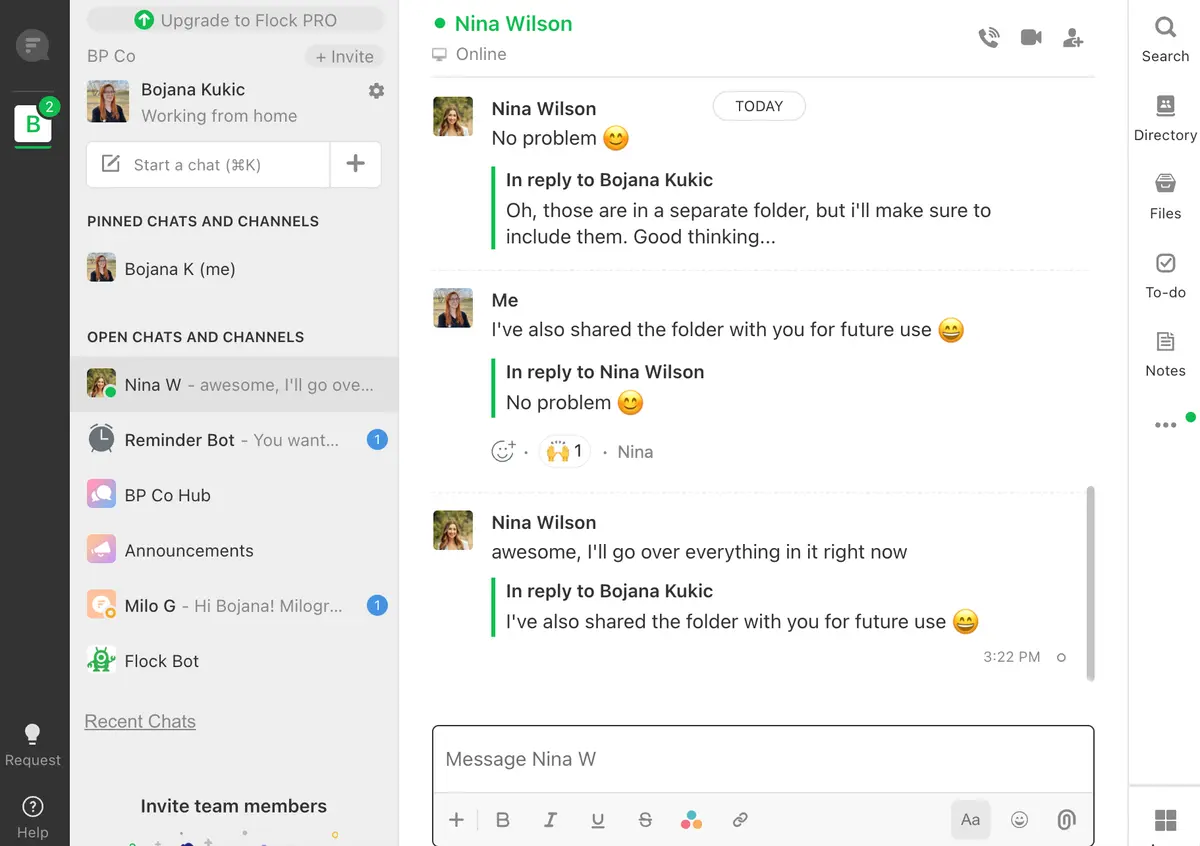
As mentioned, Flock doesn’t have threads. Instead, it allows replies, but they appear in the main chat, which can quickly create clutter rather than prevent it.
I can’t lie, relying on replies would make my daily communication a nightmare. Not being able to group replies by topic would make me lose the thread of conversation quite quickly, especially when replies start to pile on top of each other, like in the image below.
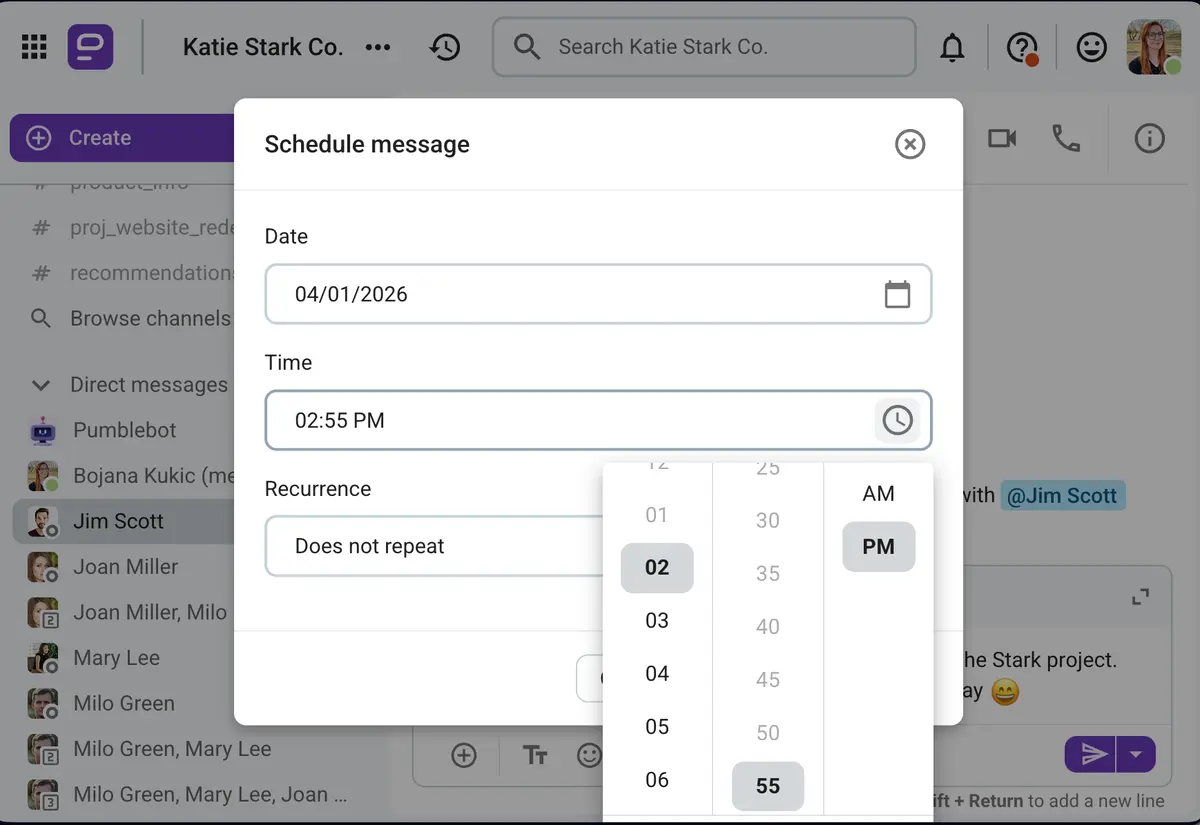
Additionally, Pumble lets you schedule messages to be sent whenever you like. I find this especially convenient for teams working across time zones or relying on asynchronous communication.
The battle of reminders: Handy additional features
Flock does include some built-in productivity features:
- To-Dos — Lets you create simple task lists directly in the app.
- Notes — A place to jot down ideas or reference information.
- Reminders — A bit different to Pumble’s message-based reminders, Flock lets you set custom reminders for yourself or other team members.
In my opinion, these features are handy but fairly basic.
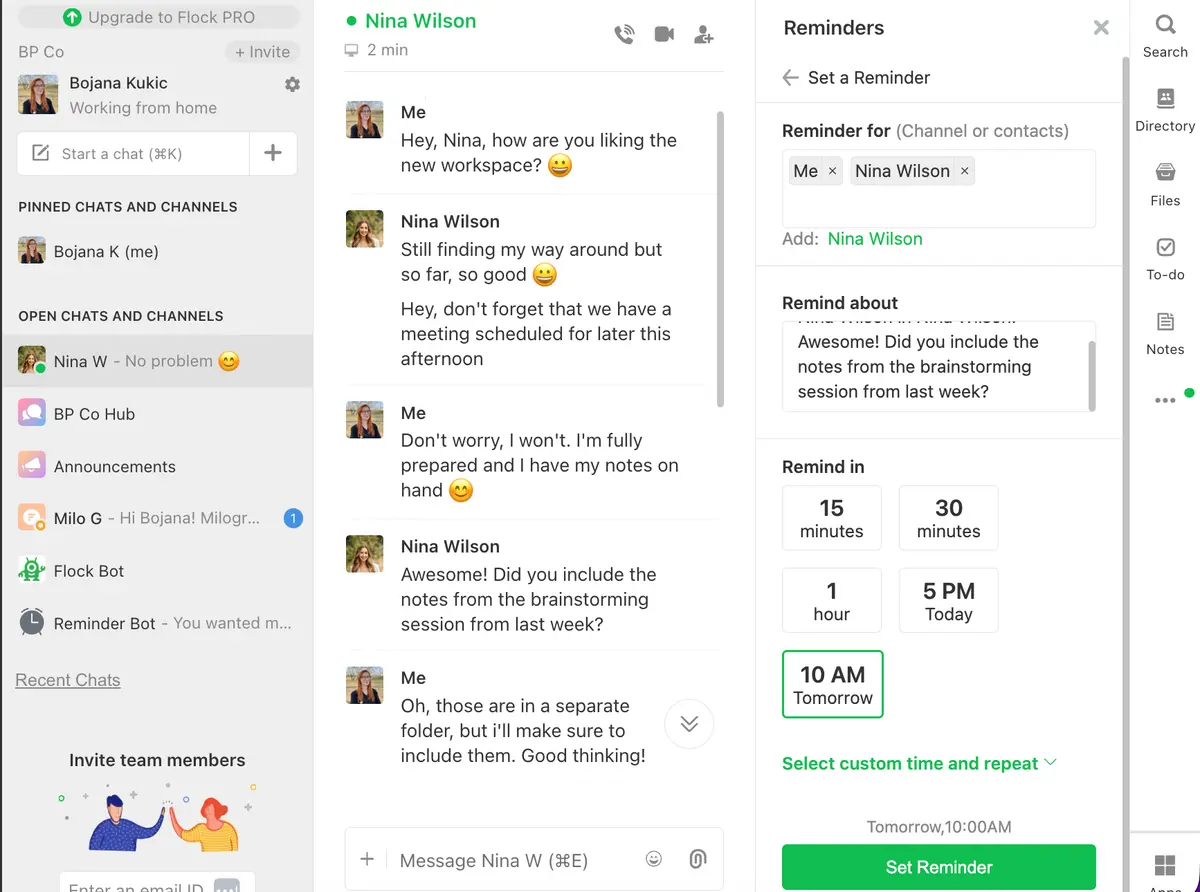
For example, the reminder feature seems underdeveloped. You need to click on “Reminders”, fill out the entire form, and then the reminder will arrive when scheduled in the “Reminder Bot” section.
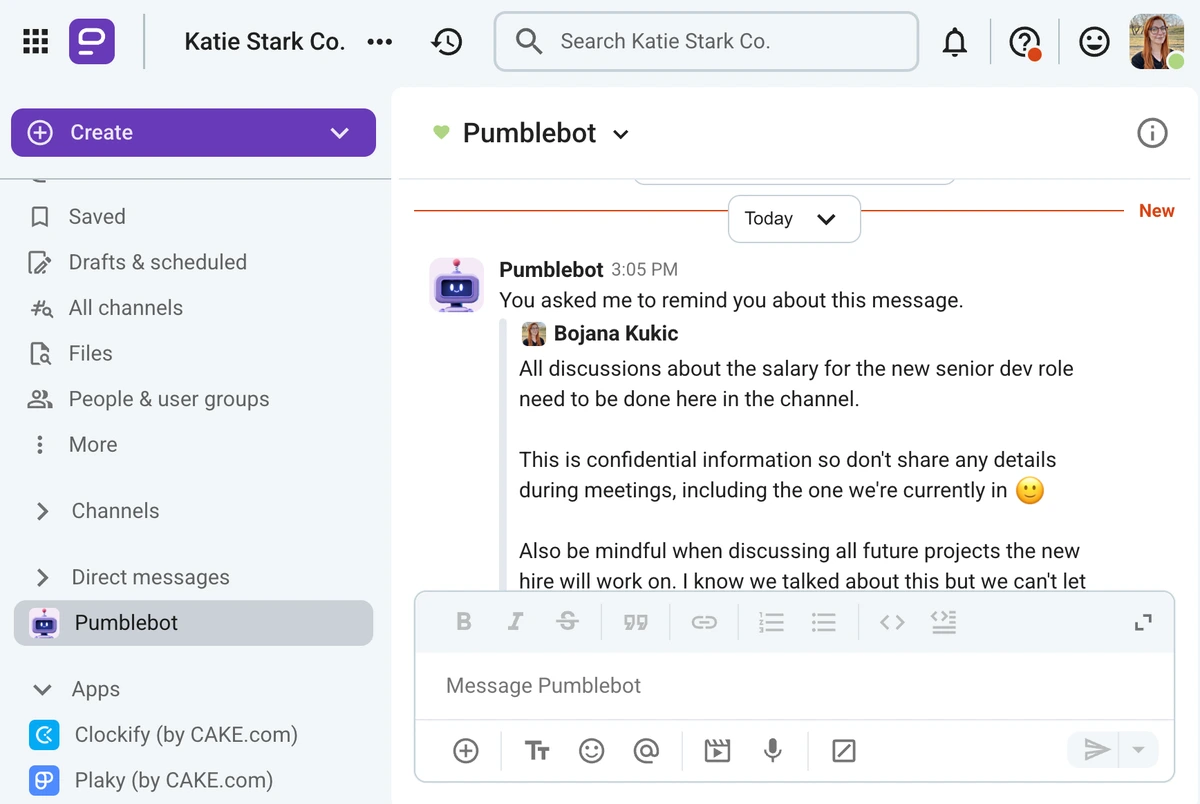
In Pumble, the reminders appear in the PumbleBot section — there’s no “Reminder Bot” taking up valuable sidebar real estate like in Flock.
Flock’s to-do feature is a nice addition, but it’s only available to paying users. However, they do clutter the app more than I would like. What’s more, even though Flock advertises this feature as “built for business productivity”, it’s hardly the full package.
A more robust alternative is integrating Pumble with Plaky, a project management app also built by CAKE.com, so you can manage tasks while getting updates directly in Pumble.

Because of its limits and lack of key features, I’d say Flock has to let Pumble take the lead.
Voice and video calls: Pumble enables team collaboration, while Flock sometimes obstructs it
Both Pumble and Flock support video and voice communication, making it possible to connect instantly and collaborate in real time.
Starting with the free plans, Pumble offers both 1-on-1 video and voice calls, while Flock only supports 1-on-1 video calls, limiting audio conferencing (outside India) to its paid plans.
And, if you thought upgrading to a paid Flock plan would make your team collaboration easier — think again. Even on paid plans, Flock caps video and voice call participants at 20. That’s barely enough to accommodate most teams.
Meanwhile, Pumble allows up to 50 call participants on the Pro plan and up to 100 on Business and Enterprise plans.
While we’re on the topic of voice calls, I have a bone to pick with Flock. The app has a very confusing and persistent issue — past calls are displayed as if they are still ongoing.
Pictured below is a notification about a call Nina and myself had that she initiated. From her side, it seems as if the call is still ongoing (as if she’s calling me and I am yet to pick up).
I’ve “joined” many calls that have long passed because of this issue on Flock — because at that moment, the calls looked active.
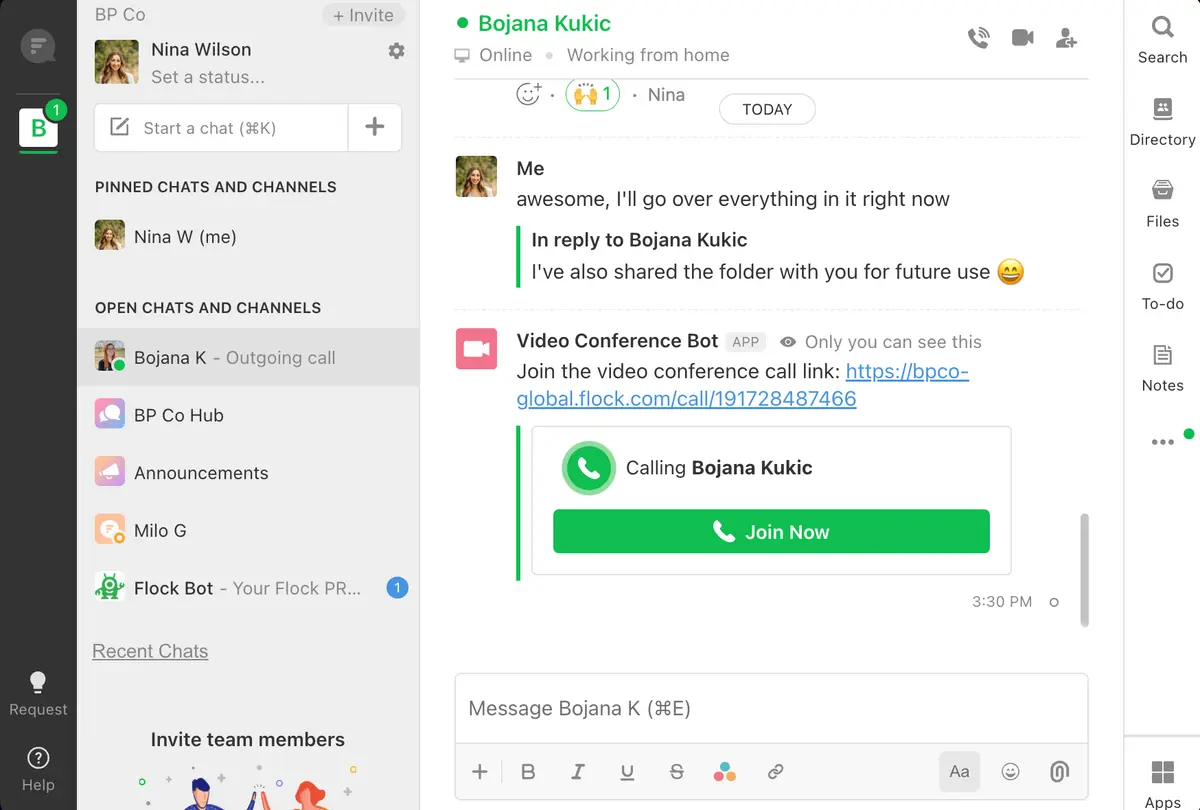
This might not seem like a big deal, but when you’re collaborating with a lot of people and have 50+ DMs on your left side panel, jumping into the wrong call just because it seems like it’s live can be an obstacle to collaboration.
Meanwhile, when a call ends on Pumble, the app displays a notification that clearly states so — as you can see below.
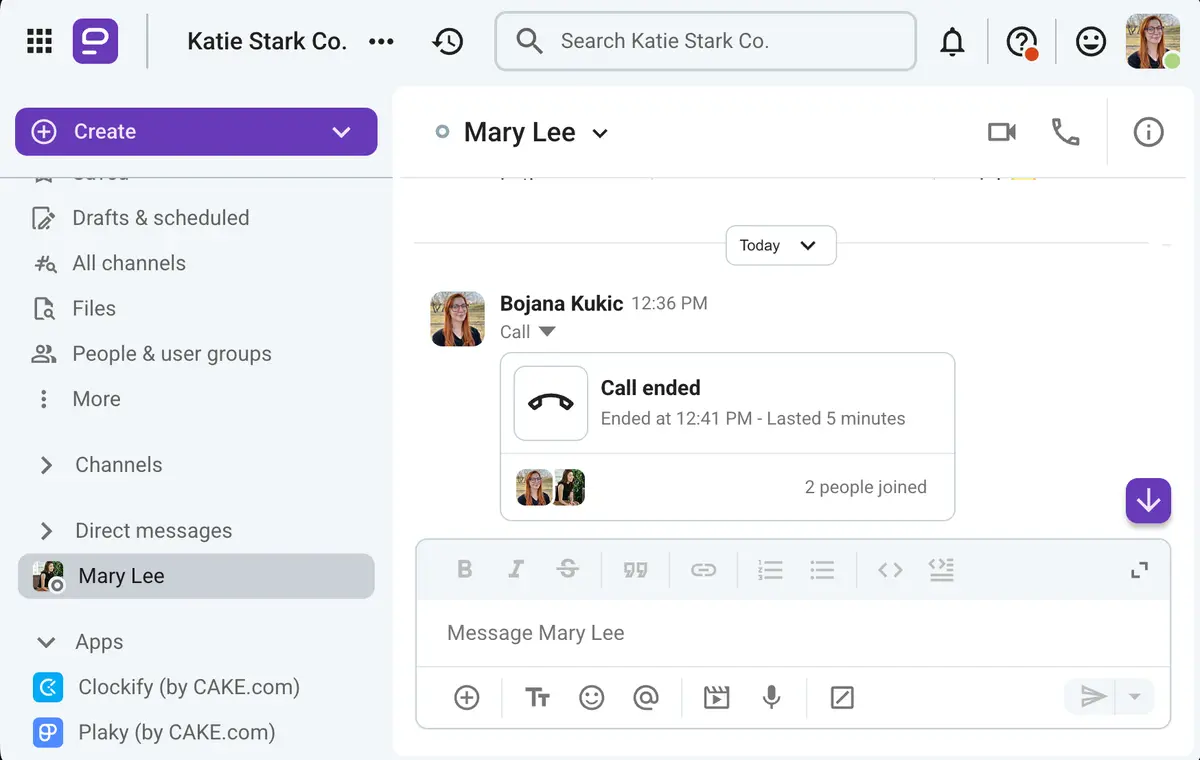
Aside from this, Pumble also has some other (more significant) advantages when it comes to video calls. It offers several features that improve the call experience:
- In-call messaging — Allows participants to share links, notes, or questions without interrupting the speaker.
- Noise cancellation — Reduces background noise for clearer audio during calls.
- Background blurring — Keeps the focus on participants while hiding distractions.
- Hand raising — Lets participants signal that they want to speak without interruption.
- Reactions — Quick emoji responses to give feedback or show agreement without speaking.
Video call features that Pumble and Flock share are screen sharing and meeting recordings — the ability to record meetings for future reference. Flock includes these features only in its Enterprise plan, while Pumble offers them starting with its Business plan.
💡 Pumble Pro Tip
If you want your team communication app to have stellar screen-sharing and video-conferencing features, then check out our top picks of apps that offer those features:
Voice and video messages: Pumble offers both, while Flock fails to deliver
Another great difference between Flock and Pumble is that Pumble offers more features for everyday communication and collaboration. Most notably — voice and video messages.
Flock doesn’t offer video messages at all, forcing its users to start a live call anytime you want to explain something visually or demonstrate a concept. It also severely limits voice messages, making them available only on the mobile app. This can be convenient for on-the-go updates, but it’s quite restrictive for desktop users.
Pumble offers both video and voice messages, making it easier to quickly share ideas, updates, or complex information.
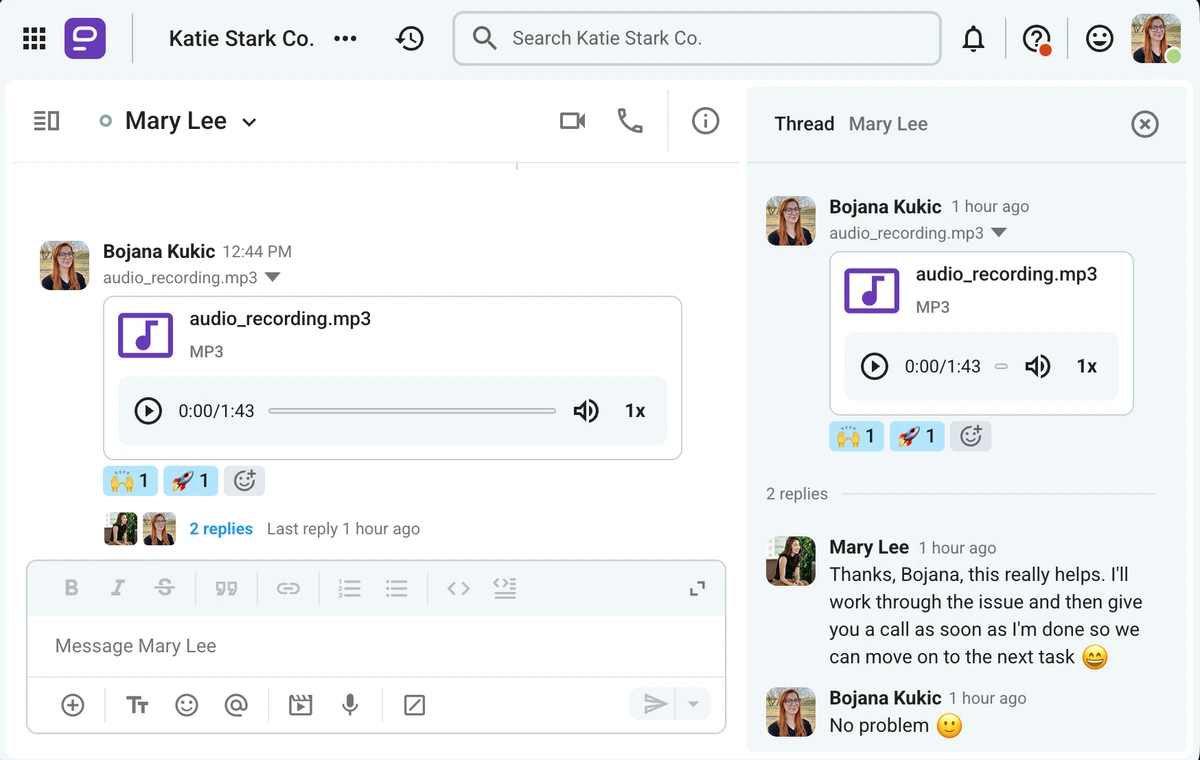
Pumble vs Flock: Pumble offers more customizable notification options
Next on our list of feature comparisons are notification preferences — essential for minimizing distractions and staying productive during the workday.
Both apps include a Do not disturb feature, but Pumble’s is more customizable. You have more choices when selecting how long to pause notifications and even set a custom schedule.
Flock also limits notification options to adjusting sounds and whether or not you get notified for calls or coworker activity. However, it does send you signals if you banned notifications in your browser, though, I’ll give it that.
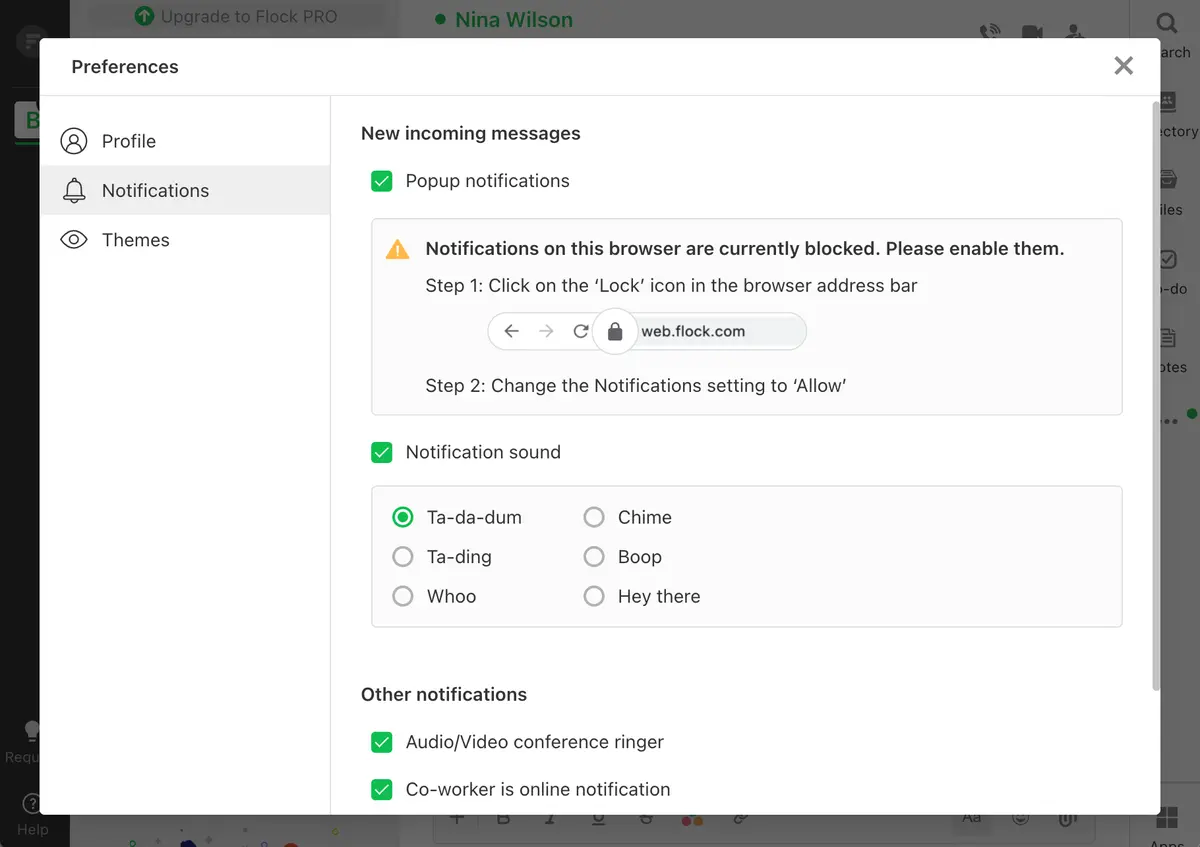
Pumble takes it a few steps further, letting you choose what you want to be notified about, set sounds, and create a custom schedule for each day of the week.
These extra options make a big difference for me in drowning out unnecessary pings and focusing on deep work.
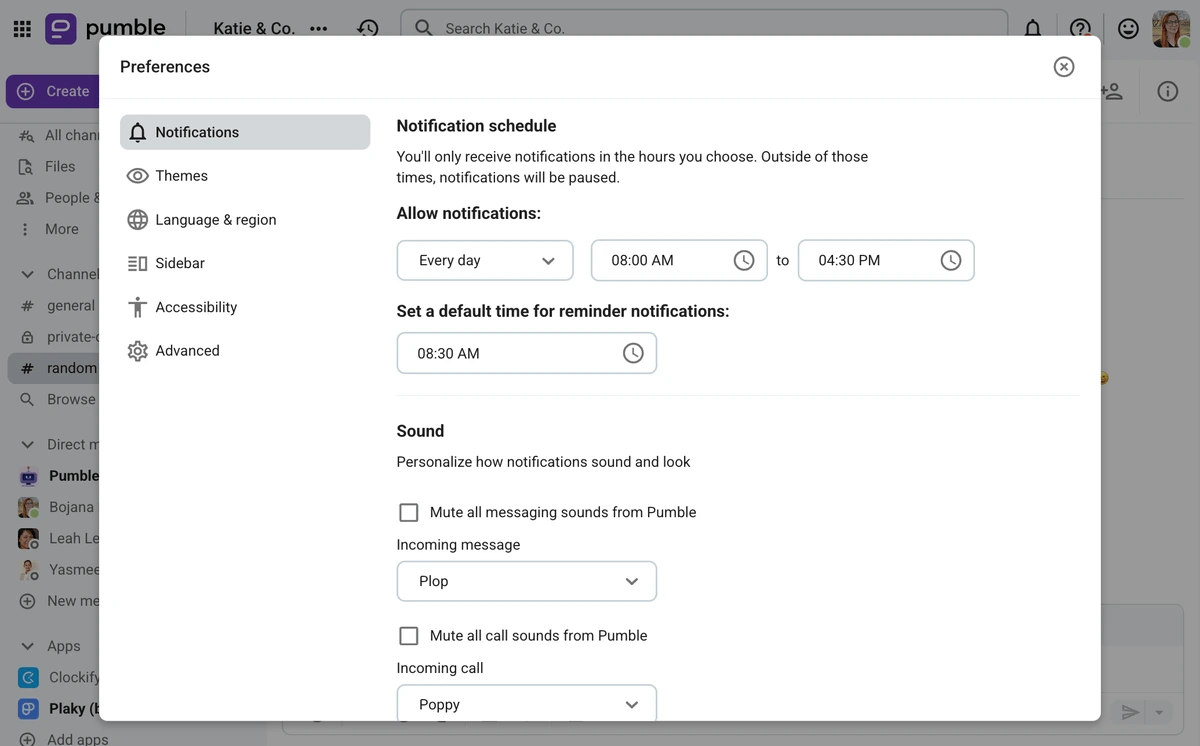
When it comes to muting channels and DMs, Flock requires you to type the /mute command to fully silence a channel. I discovered this while exploring the app, and it wasn’t as straightforward as I expected. In contrast, muting in Pumble takes just a couple of clicks.
Pumble vs Flock: Both apps offer solid search options
My most-used team communication app feature is — believe it or not — search. My team uses Pumble as our internal knowledge base, which means all information we ever shared is stored in our channels and DMs. That includes messages, files, documents, and everything in between.
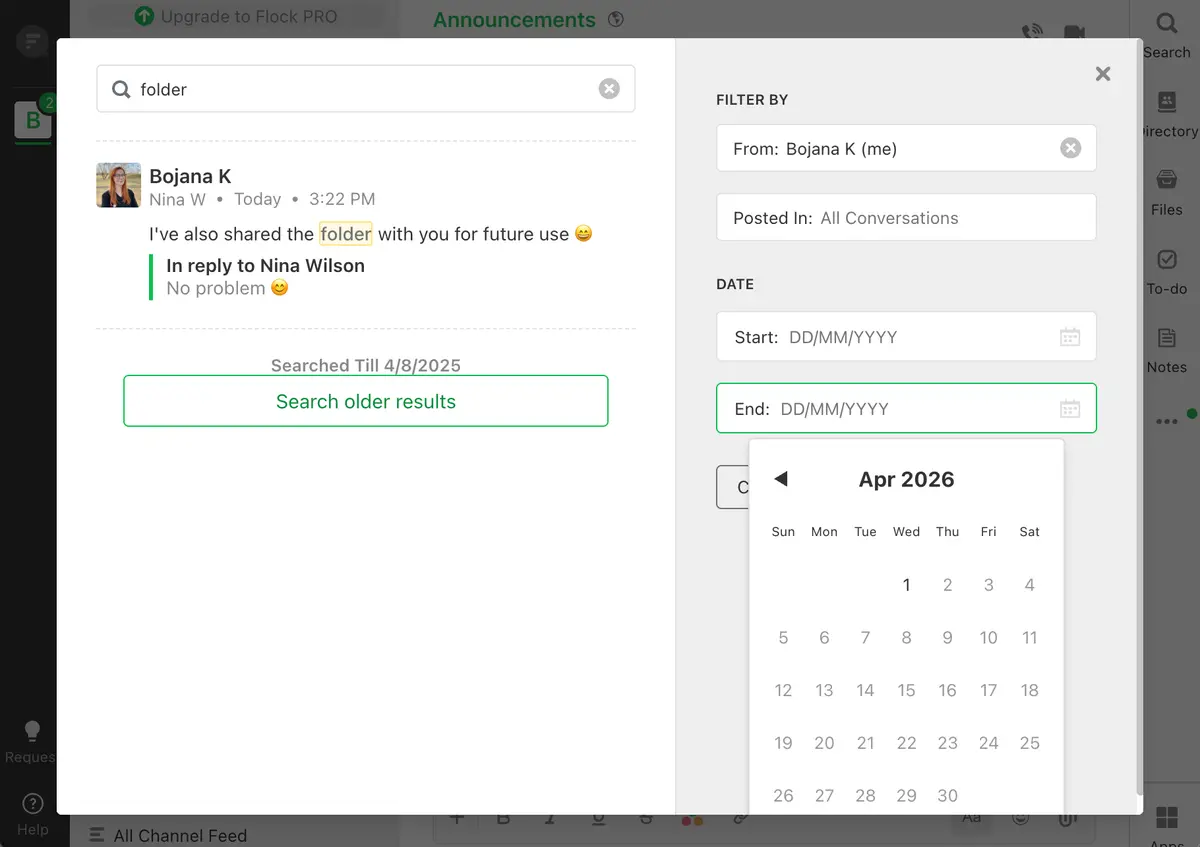
That’s why I need advanced filters — which is something both Flock and Pumble offer.
Both apps offer solid search filters, letting you filter by different parameters such as:
- Who sent the message,
- Where it was sent, and
- A date range for when it was sent.
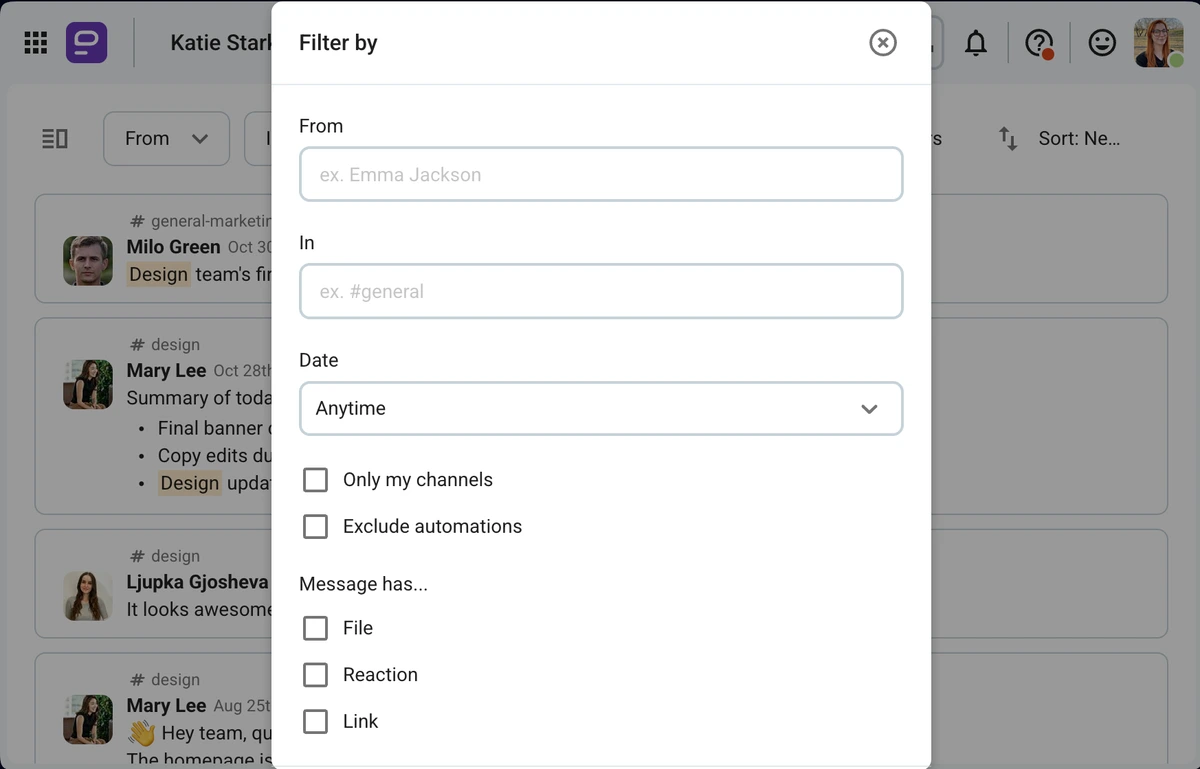
Pumble, once again, goes further with additional customization, letting you also filter by:
- Messages only in your channels,
- Excluding automated messages, and
- Messages containing a file, reaction, and/or link.
Of course, even if it had the most sophisticated search filters in the world, that wouldn’t offset the fact that Flock limits searchable messages to 10,000 on its free plan. And what good are complex filters when the app won’t let you search your entire messaging history, right?
Meanwhile, Pumble offers unlimited message history across all plans, which means that even free users can create their own digital headquarters in Pumble without worrying that they’ll hit a cap on message history.
If you currently have a digital HQ of your own on another team collaboration app and are looking to make the switch, you’ll be happy to hear that Pumble supports CSV data import from any app.
Flock, on the other hand, only supports migrating team data from Slack, HipChat, and Stride, and it limits free members to only migrating the data from public channels.
Pumble vs Flock: Pumble offers more storage and better file sharing
When it comes to storage and file sharing, the difference between Pumble and Flock comes down to the numbers.
Pumble provides:
- 10 GB per workspace on the Free plan,
- 10 GB per seat on the Pro plan,
- 20 GB per seat on the Business plan, and
- 100 GB per seat on the Enterprise plan.
Flock’s storage limits are:
- 5 GB per team on the Starter plan,
- 10 GB per team member on the Pro plan, and
- 20 GB per team member on the Enterprise plan.
Pumble allows file uploads up to 512 MB in both free and paid plans.
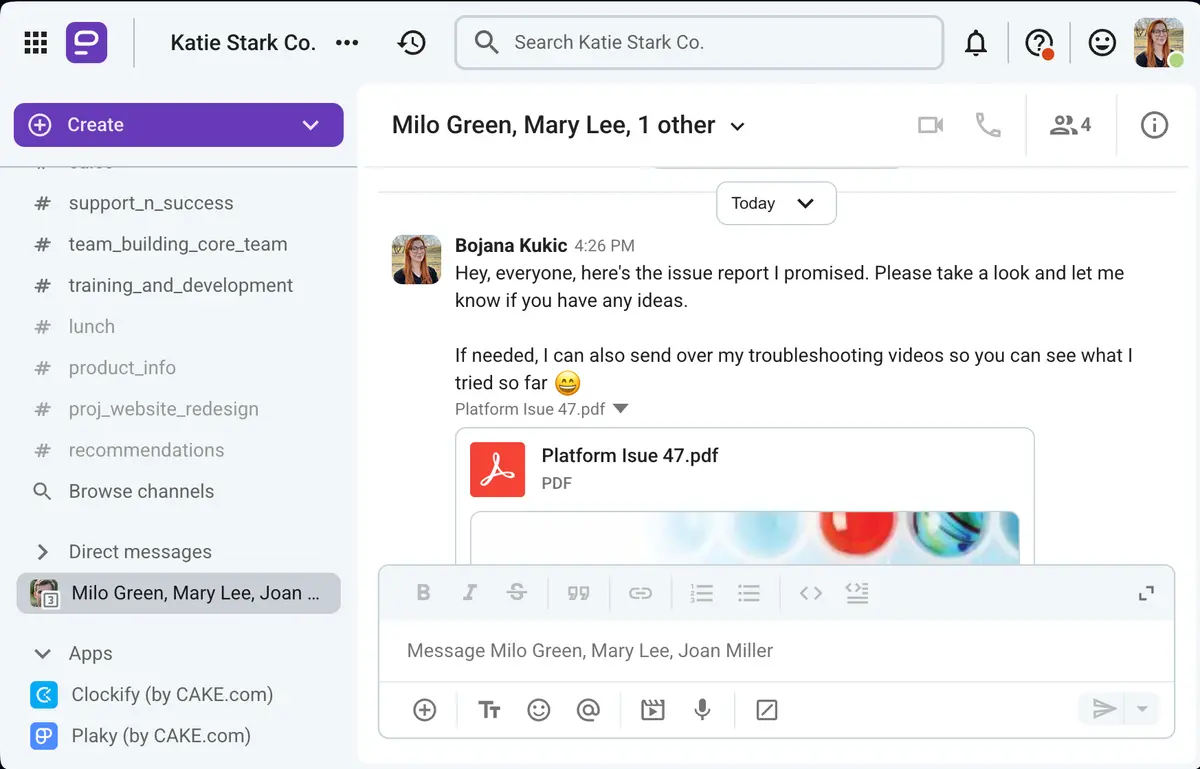
Flock, on the other hand, caps file uploads at 100 MB, regardless of which plan you’re on.
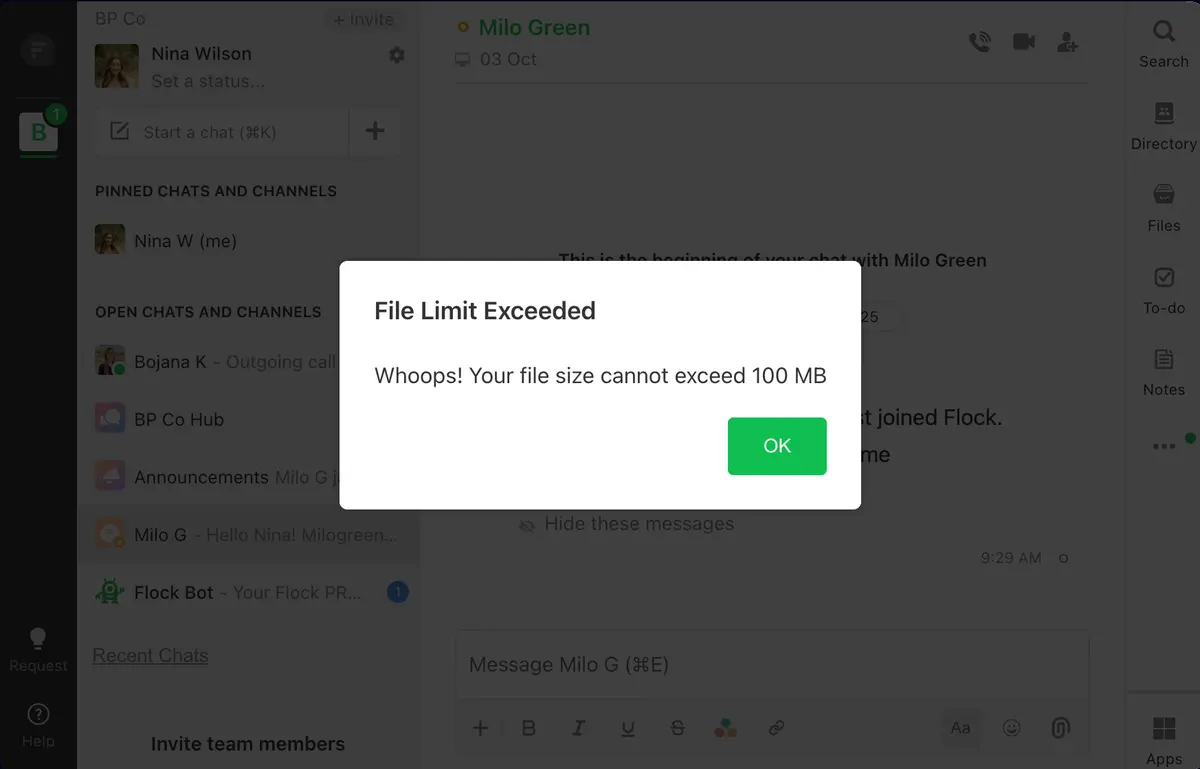
This round is a no-brainer — Pumble clearly comes out ahead with its more generous limits.
Share bigger files with Pumble
Pumble vs Flock: Flock has more integrations, but Pumble lets you build your own
Integrations are an important part of any communication app, allowing you to connect your tools, automate workflows, and improve collaboration.
Flock offers a higher number of integrations, around 60, giving teams a wide variety of options. This can be useful if your team already relies on many external tools.
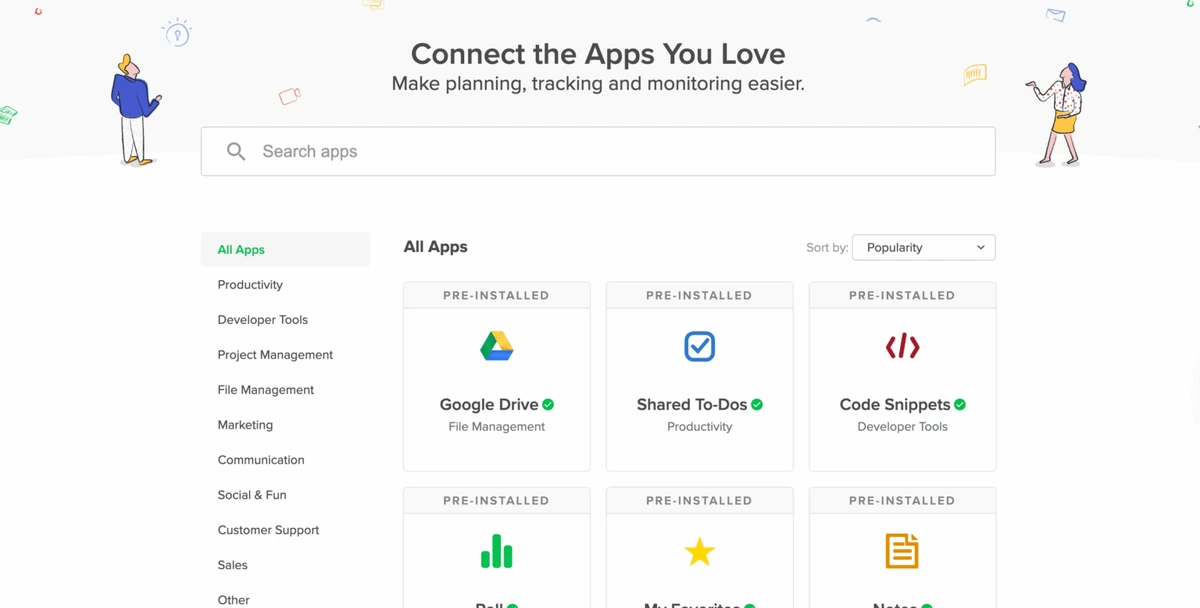
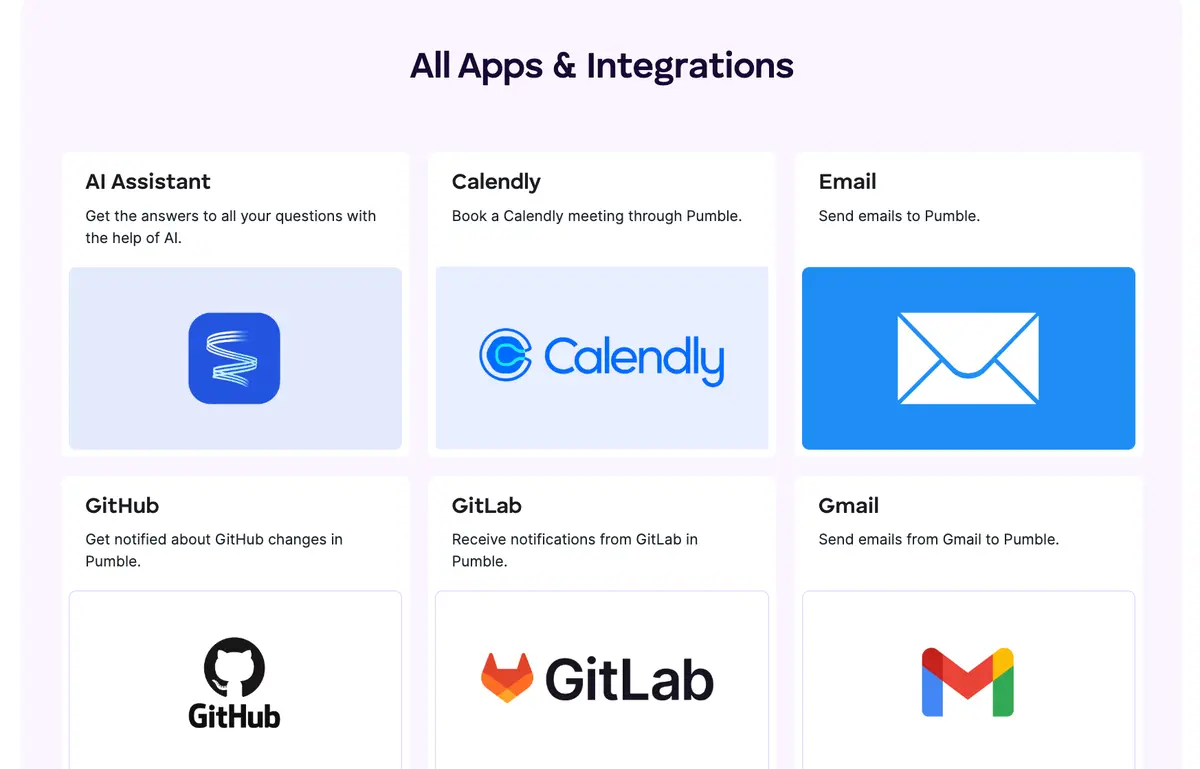
On the other hand, Pumble keeps its focus on high-impact integrations, which are most useful for productive teamwork, and its catalogue is always growing.
You can also use CAKE.com’s Marketplace to build and publish custom add-ons, tailored to your workflow.
Pumble is developed by CAKE.com, the same company behind Clockify (a time tracking app) and Plaky (project management software). All 3 apps are made to work together, so you can handle communication, tasks, and time tracking effortlessly.
The best part? With the CAKE.com Bundle, you get the Enterprise plans of all 3 apps for one affordable price — giving your team a complete productivity toolkit without breaking the budget.
Pumble vs Flock: Pumble has 24/7 human support, even on the free plan
Knowing you have somewhere to turn when you run into an issue is a huge advantage — no matter the type of app you’re using.
If you’re anything like me, you prefer to skip the guesswork and get a clear answer — preferably from a human.
In Flock’s free plan, support is limited to:
- Browsing the Help Center,
- Submitting a request form, or
- Using the live chat.
They do improve this with priority support in the Pro plan and dedicated support in the Enterprise plan, but that comes at a price.
Pumble, on the other hand, makes human support a priority from the start.
Aside from its extensive Help page, you get 24/7 access to real people through email, chat, or phone on all plans.
For larger teams, there’s also a dedicated support representative, available from:
- 200+ seats in the Pro plan,
- 120+ seats in the Business plan, and
- 70+ seats in the Enterprise plan.

Pumble vs Flock: Both apps have high security standards
Last but not least, we have another crucial component we need to examine when determining which app is the right fit for your business — security.
Using a secure messaging app ensures your company data, conversations, and files remain protected.
Although both tools provide advanced data encryption and security, Pumble stands out with a few more certifications under its belt.
Flock’s security policy includes:
- Admin controls,
- Google oAuth Sign-On,
- SOC 2 Compliance, and
- TLS 1.2 Data Encryption.
Meanwhile, Pumble is part of the CAKE.com enterprise, where security is the highest priority. That’s why it’s certified for ISO/IEC 27001:2022 and SOC 2, GDPR compliant, and includes enhanced security features such as:
- Multi-factor authentication,
- Data encryption,
- Granular admin roles and permissions,
- Security assertion markup language single sign-on (SAML SSO), and
- Custom data retention settings.
These safeguards make Pumble a secure platform for handling sensitive business information and communication, giving teams confidence that their data is protected.
The fact that Pumble goes the extra mile to give teams more control and peace of mind makes it a clear winner in my book. But if you’re still on the fence, here’s something that might sway you — Pumbe has a bug bounty program.
The company welcomes all participants and invites them to report potential security issues, so it can find even the smallest vulnerabilities and maintain the highest level of security. This program is a testament to the company’s devotion to moving forward and always offering the best to their clients — something that Flock can’t really say.
💡 Pumble Pro Tip
Need more information about Flock? Check out our honest review where we dissect all of Flock’s features and explain the pros and cons of becoming a user:
Need a tool for growing teams? Go for Pumble by CAKE.com
No matter the current size of your business, every organization aims to grow and expand.
That’s why it’s important to choose a communication tool that scales with you, not one that holds you back.
While both Pumble and Flock offer solid features, only Pumble provides free and paid plans generous enough to support a growing team at a reasonable price.
Flock might seem like a good option at first, but it won’t be long before you discover the same thing I did — it’s a tool built for micro teams that need a short-term solution.
Meanwhile, Pumble offers:
- Robust communication options,
- Strong storage and file management, and
- 24/7 human support.
In other words, it’s a well-rounded collaboration platform that keeps your team efficient and connected.
For teams that want to stay productive without limits, Pumble comes out on top.
Choose the app that grows with your team.